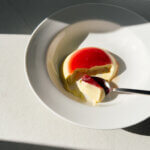
Blood orange panna cotta
A gorgeous blood orange infused panna cotta layered with a ruby red blood orange jelly. A stunning dessert that's easier to make than it seems!
Servings: 4 panna cotta
Equipment
- 4 ramekins or moulds that can hold approx 125ml
Ingredients
Blood orange jelly
- Juice of two blood oranges - approx 150ml
- 1 tbsp sugar
- 2 g gelatine leaf
Panna cotta
- Zest of 1 blood orange
- 30 g caster sugar
- 150 ml milk
- 150 ml cream
- 1 tsp vanilla
- 4 g gelatine leaf
Instructions
Blood orange jelly
- Soak 2g gelatine leaf in cold water for 5 minutes.
- Zest one blood orange, and use your fingers to rub the zest together with the 30g sugar for the panna cotta - set aside.
- Meanwhile, juice the two oranges to yield approximately 150ml and combine with 1 tbsp sugar and gently heat in a saucepan until the sugar has dissolved.
- Remove the pan from the heat, then add the softened gelatine to the blood orange juice mixture and stir to dissolve.
- Strain through a sieve and into four ramekins or moulds - then chill for a couple of hours until set.
It's important to set the jelly before adding the panna cotta layer to ensure clean layers.
Panna cotta
- While it’s setting, you can make the panna cotta itself - combine the milk, cream, blood orange zest/sugar mixture and vanilla to a saucepan and gently heat until it’s just starting to boil, then turn the heat off and allow the mixture to steep for 5 minutes.
- While it’s steeping, soak 4g gelatine leaf in cold water to soften.
- Squeeze out excess water from the gelatin leaf then add directly to the hot milk mixture – stir until dissolved.
- Strain the liquid into a bowl set over a larger bowl filled with iced water, stirring frequently over 15 minutes until it cools and thickens slightly.
- Pour into the ramekins with the blood orange jelly, and refrigerate for 4-6 hours.
- To serve, use a knife to gently and carefully pull the panna cotta away from the mould and break any air seal, then invert the mould onto a plate. You can use a blow torch to help release the panna cotta, or alternatively briefly submerge the base of the mould in hot water before inverting onto a plate.
You must cool the panna cotta before adding it to the jelly layer to avoid melting the jelly.
