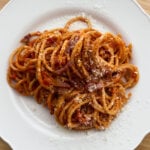
Bucatini all’Amatriciana
One of the classic Roman pastas! A combination of guanciale, tomatoes, Pecorino Romano and lots of black pepper.
Servings: 2 people (very generous portions!), or split to 4 smaller portions
Ingredients
- 220 g guanciale rind removed and cut into small pieces (should equate to about 200g after the rind is removed)
- 2 x 400g cans of whole, peeled tomatoes preferably San Marzano
- 100 g pecorino Romano very finely grated - just the powder grade on a box grater
- 1/2 tsp freshly ground black pepper plus more to serve
- 300 g bucatini
Instructions
- Add the guanciale to a cold pan and place over a low heat. Allow the guanciale to slowly render and crisp up - don’t rush this step. If you want to extract as much of that gorgeous fat as possible, it’s essential to go low and slow here. Around 15 minutes.
- Remove the guanciale from the pan and set aside - reserve the fat in the pan.
- Crush the tomatoes with your hands and add to the hot fat, now over a low-moderate heat. Add a pinch of salt and the black pepper, and allow this to bubble away uncovered over the course of about 15 minutes before you start cooking the bucatini.
- Cook the bucatini in a large pot of generously salted water, removing 2 minutes before al dente.
- Throw the bucatini into the tomato sauce and allow it to continue cooking for a minute or so. It will absorb any extra liquid from the sauce as it finishes cooking, but if your sauce has been going pretty rapidly and has dried out a bit, you can add a splash of pasta water as needed to help it along.
- Sprinkle over 3/4 of the grated pecorino (reserve the rest for serving) and importantly, toss toss toss to work this into the sauce. I’m not usually one to toss my pasta aggressively, but for some reason this technique really makes a difference to the sauce. It’s also imperative that you grate the cheese as finely as possible to avoid any stringy clumps. The finely grated pecorino is really what makes the perfect texture in the sauce, IMO.
- Add the crisp guanciale back in, reserving a handful for garnishing. Toss again and you’re ready to serve.
- Plate up, adorning the bucatini with pieces of crispy guanciale, a smattering of pecorino Romano, and a little black pepper.
