
Bucatini all’Amatriciana
While I consider myself something of a professional carbonara maker, bucatini all’Amatriciana might actually make it onto our table more often. It’s also one of those dishes I find almost impossible not to order when I spot it on a menu. And for good reason!
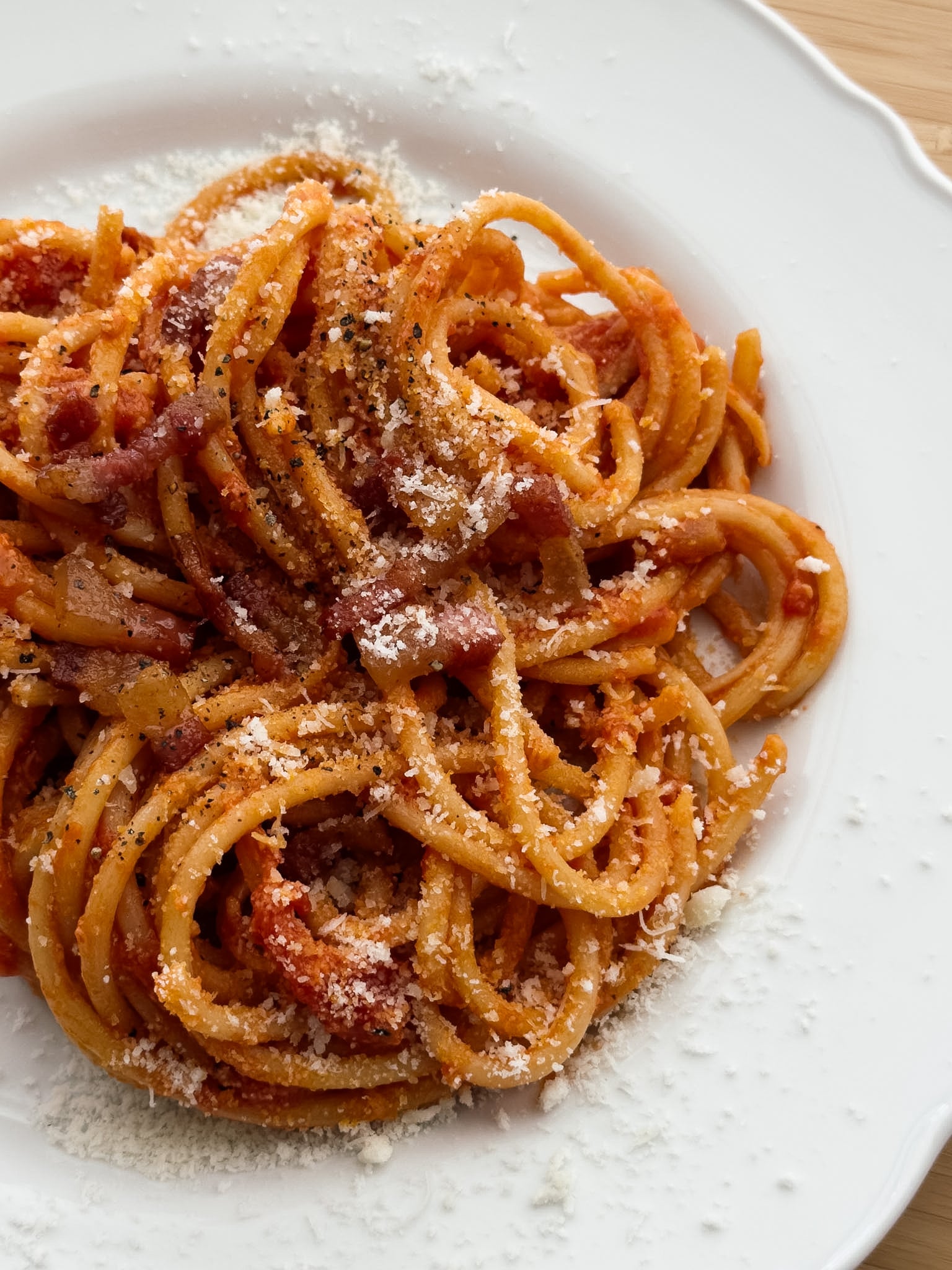
Amatriciana is a perfect example of how a handful of humble ingredients can become something truly exquisite. My version combines slowly rendered guanciale, whole peeled tomatoes, Pecorino Romano and black pepper to create a rich, savoury sauce that just coats the bucatini without drowning it.
I’ve experimented with quite a few versions of Amatriciana over the years – some more controversial than others! – but after plenty of cooking, research and admittedly a few comments from traditionalists on social media, I’ve come to the conclusion that the simpler approach really is my favourite.
What is Amatriciana?
Amatriciana is a classic Italian pasta sauce made with guanciale, tomatoes and Pecorino Romano. Although it’s strongly associated with Roman cuisine, the dish actually originated in Amatrice, a town in the Lazio region outside Rome.
Amatriciana is also considered one of the four famous Roman pasta dishes alongside carbonara, cacio e pepe, and pasta alla gricia. I’ve even taken the classic combination of Pecorino and black pepper and turned it into a cacio e pepe risotto.
Amatriciana has close ties to gricia. The earliest version was made without tomatoes, using ingredients such as guanciale and cheese that shepherds could carry with them. Tomatoes were incorporated later, transforming the original sugo bianco into the red sauce we now know as Amatriciana.
Like practically every classic Italian recipe, exactly what should and shouldn’t go into Amatriciana is hotly debated. Garlic? Onion? Chilli? White wine? Even the type of tomato and pasta shape can start an argument! After trying practically every variation, I’ve found that keeping things simple lets each ingredient really sing.
Why You’ll Love This Recipe
- Just a handful of ingredients: Guanciale, tomatoes, Pecorino Romano, black pepper, and bucatini. That’s pretty much it!
- BIG flavour: The ingredient list might be short, but slowly rendered guanciale gives the entire tomato sauce this incredible savoury richness.
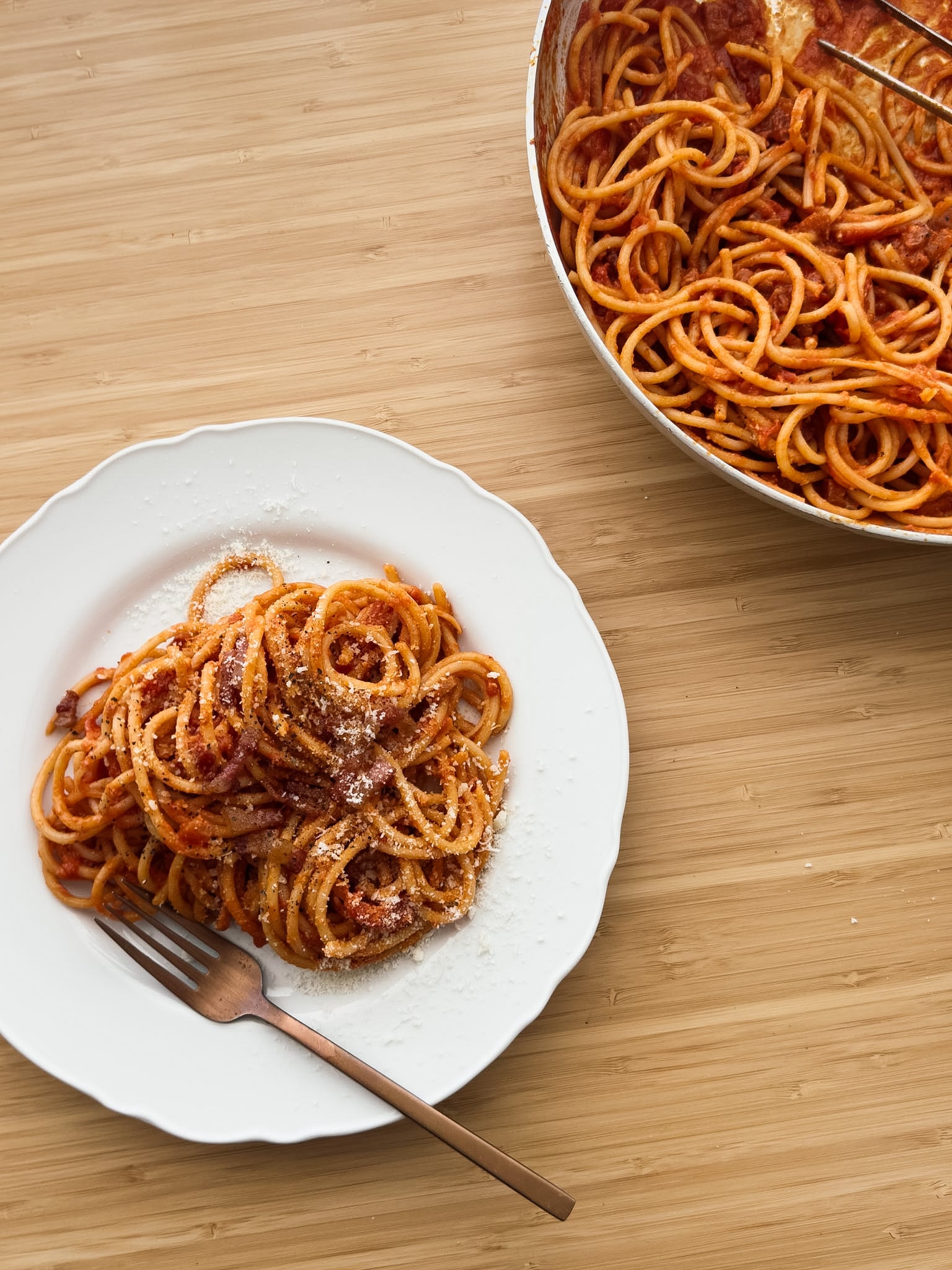
- The perfect sauce-to-pasta ratio: This isn’t meant to be a bowl of pasta swimming in tomato sauce. The sauce thickens and clings to the bucatini, coating every strand.
- Ready relatively quickly: The guanciale takes about 15 minutes to render and the tomato sauce another 15 minutes or so to cook down. It’s a lot of flavour without hours of simmering.
Ingredients and Notes
With so few ingredients in an Amatriciana recipe, the quality of each one really matters.
- Guanciale – This is cured pork jowl and the ingredient responsible for so much of the flavour in Amatriciana. I slowly render it over low heat until beautifully crisp, which leaves us with all that gorgeous rendered fat for cooking the tomatoes. Remove the rind before cutting the guanciale into small pieces. If you’ve got some left over, it’s also incredible in my pici with guanciale and tomato butter.
- Whole peeled tomatoes – I use two 400g tins of whole peeled tomatoes, preferably San Marzano. Crush them with your hands before adding them directly to the rendered guanciale fat.
- Pecorino Romano – Sharp, salty Pecorino Romano is essential here. Grate it as finely as possible so it melts smoothly into the sauce rather than becoming stringy or clumpy.
- Black pepper – I add freshly ground black pepper to the tomato sauce and a little more before serving.
- Bucatini – Those thick, hollow strands are made for a sauce like this. If you can’t find bucatini, spaghetti works well, and rigatoni is another common pairing. I remove the pasta from the water about 2 minutes before it reaches al dente so it can finish cooking directly in the sauce.
How to Make Bucatini all’Amatriciana
- Render the guanciale. Add the guanciale to a cold pan and place it over low heat. Cook slowly for around 15 minutes, allowing the fat to render and the pieces to become crisp. Don’t rush this step! It’s key to creating the rich flavour base we want.
- Set it aside. Remove the crispy guanciale from the pan and set it aside, leaving all of the rendered fat in the pan.
- Make the Amatriciana sauce. Crush the whole peeled tomatoes with your hands and add them to the hot guanciale fat. Increase the heat slightly to low-medium, then add a pinch of salt and the black pepper. Leave the sauce to gently bubble uncovered.
- Cook the bucatini. Bring a large pot of generously salted water to the boil and cook the bucatini. Remove it about 2 minutes before it reaches al dente. Otherwise, it will become mushy when paired with the sauce.
- Finish the pasta in the sauce. Transfer the bucatini directly into the tomato sauce and cook for another minute or so. The pasta will absorb some of the liquid as it finishes cooking. If your sauce has reduced a little too much, add a splash of pasta water.
- Add the Pecorino. Sprinkle over about three-quarters of the finely grated Pecorino Romano, reserving the rest for serving. Then toss, toss, toss! I’m not usually one to aggressively toss my pasta, but it really does make a difference here, helping the cheese and sauce coat every strand.
- Return the guanciale. Add most of the crispy guanciale back to the pan, reserving a handful for serving, and toss everything together once more.
- Serve. Divide the bucatini between bowls and finish with the reserved crispy guanciale, Pecorino Romano, and freshly ground black pepper.
My Top Tips
- Start the guanciale in a cold pan. You want to slowly render as much of the fat as possible rather than immediately frying the outside. Low and slow is the way to go.
- Don’t discard the guanciale fat. This forms the flavour base for the entire Amatriciana sauce. Once the guanciale is removed, the tomatoes go straight into the same pan.
- Keep the sauce thick. Amatriciana shouldn’t be overly wet or saucy. Let the tomatoes cook uncovered until the sauce has reduced enough to cling to the pasta.
- Undercook your bucatini slightly. Pull it from the boiling water about 2 minutes before al dente and let it finish in the tomato sauce. This gives the pasta time to absorb flavour while helping the sauce cling to it.
- Grate your Pecorino VERY finely. This is imperative! Finely grated cheese incorporates much more easily into the sauce and helps you avoid those stringy clumps.
- Toss it properly. Once the Pecorino goes in, give the pasta a really good toss. This helps work the cheese, rendered fat, and tomato together into a cohesive sauce that coats the bucatini.
What to Serve with Bucatini all’Amatriciana
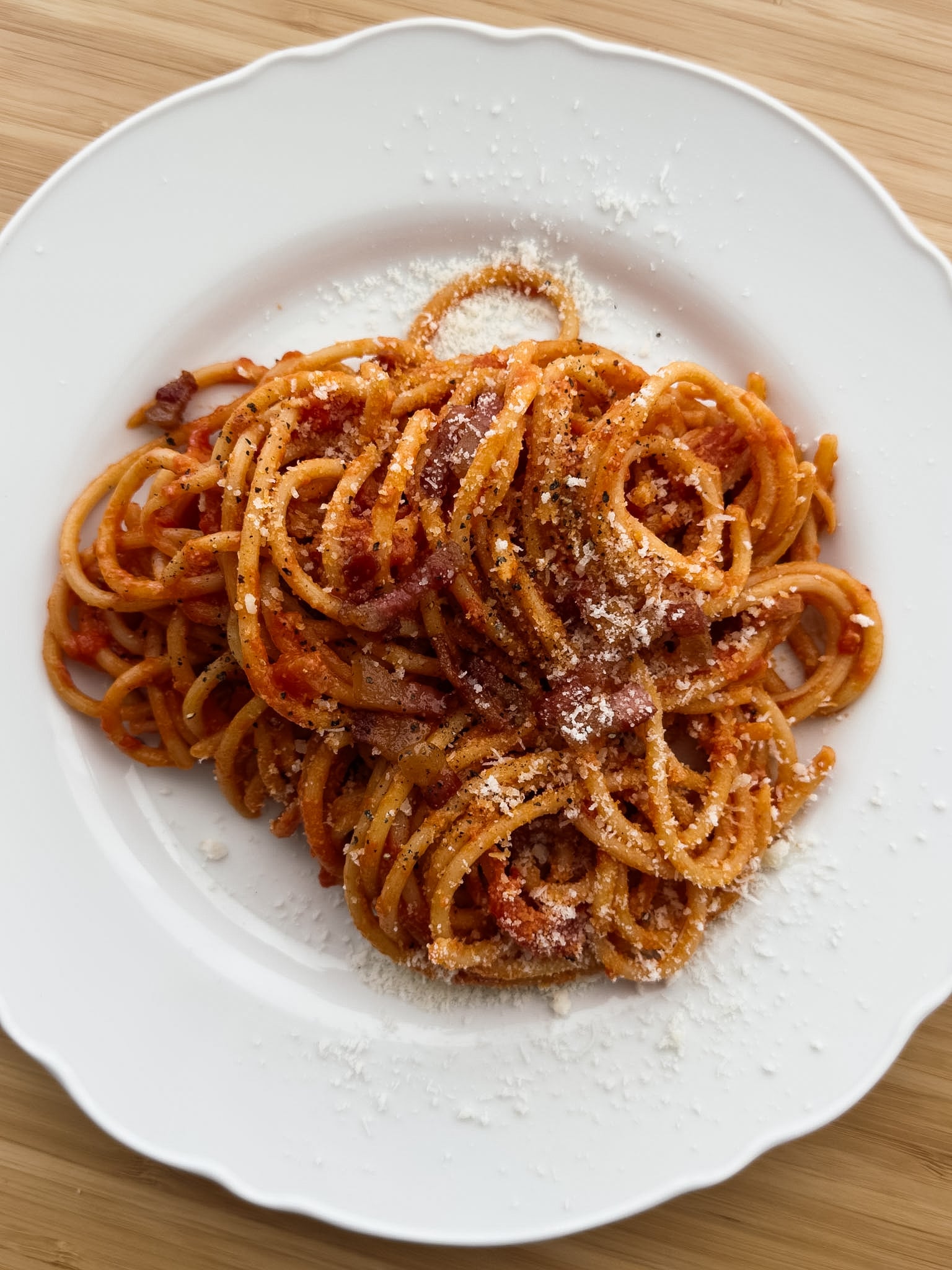
Bucatini all’Amatriciana is rich, salty, and seriously satisfying, so I like to keep anything alongside it relatively simple. A crunchy green salad is perfect for adding some freshness, while good bread, like my easy sourdough bread, never goes astray when there’s tomato sauce involved.
Storage and Reheating
Like most pasta dishes, bucatini all’Amatriciana is at its absolute best served immediately while the sauce is glossy, the pasta is perfectly al dente, and the guanciale is still crisp.
If you do have leftovers, transfer them to an airtight container and refrigerate for up to 2 days. Reheat gently in a pan with a small splash of water to help loosen the sauce.
I don’t recommend freezing the finished pasta. If you want to get ahead, make the Amatriciana sauce separately, then cook fresh bucatini and finish it in the sauce just before serving.
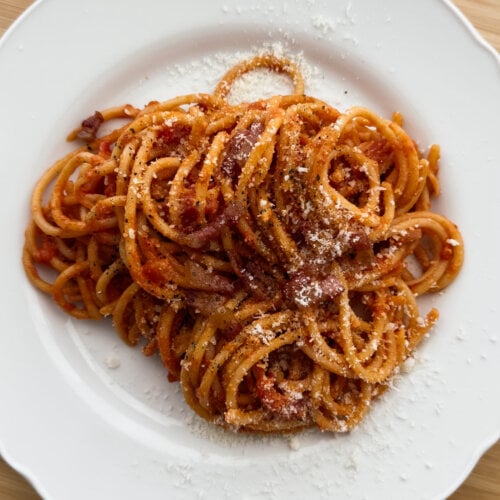
Bucatini all’Amatriciana
Ingredients
- 220 g guanciale rind removed and cut into small pieces (should equate to about 200g after the rind is removed)
- 2 x 400g cans of whole, peeled tomatoes preferably San Marzano
- 100 g pecorino Romano very finely grated – just the powder grade on a box grater
- 1/2 tsp freshly ground black pepper plus more to serve
- 300 g bucatini
Instructions
- Add the guanciale to a cold pan and place over a low heat. Allow the guanciale to slowly render and crisp up – don’t rush this step. If you want to extract as much of that gorgeous fat as possible, it’s essential to go low and slow here. Around 15 minutes.
- Remove the guanciale from the pan and set aside – reserve the fat in the pan.
- Crush the tomatoes with your hands and add to the hot fat, now over a low-moderate heat. Add a pinch of salt and the black pepper, and allow this to bubble away uncovered over the course of about 15 minutes before you start cooking the bucatini.
- Cook the bucatini in a large pot of generously salted water, removing 2 minutes before al dente.
- Throw the bucatini into the tomato sauce and allow it to continue cooking for a minute or so. It will absorb any extra liquid from the sauce as it finishes cooking, but if your sauce has been going pretty rapidly and has dried out a bit, you can add a splash of pasta water as needed to help it along.
- Sprinkle over 3/4 of the grated pecorino (reserve the rest for serving) and importantly, toss toss toss to work this into the sauce. I’m not usually one to toss my pasta aggressively, but for some reason this technique really makes a difference to the sauce. It’s also imperative that you grate the cheese as finely as possible to avoid any stringy clumps. The finely grated pecorino is really what makes the perfect texture in the sauce, IMO.
- Add the crisp guanciale back in, reserving a handful for garnishing. Toss again and you’re ready to serve.
- Plate up, adorning the bucatini with pieces of crispy guanciale, a smattering of pecorino Romano, and a little black pepper.