Herb laminated pasta dough

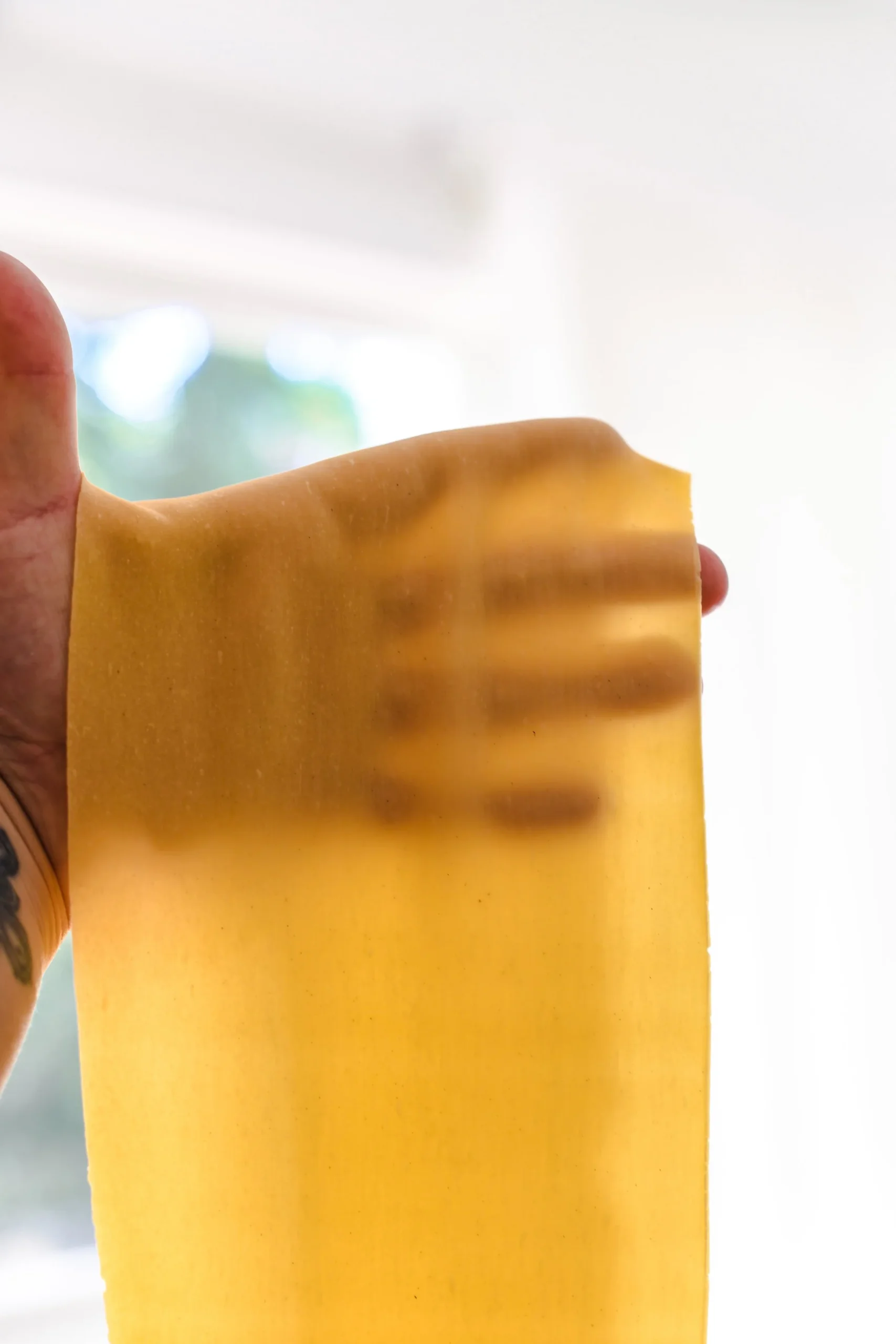
This fancy looking herb laminated pasta dough can look and sound intimidating, but it’s a lot easier than you think. Use your favourite pasta dough recipe and add the herbs (or edible flowers!) of your choice. Of course I like to use my master dough recipe here, but truly you can use any egg dough and follow the steps in my recipe below.
Simply put, you go about your business in the same way you would if you were making any sheeted pasta. Roll it out until thin, add the herbs between two sheets of rolled dough, before re-rolling to laminate the herbs into the pasta dough. Simple.
Personally I think this is a great pasta to pull out if you want to impress, but it’s best served in a light sauce so you can see the herbs in the dough. There’s no point in going to the effort if you’re going to mask it in a heavy sauce that hides the beautiful patterns the herbs create.


Herb laminated pasta dough
Ingredients
- 360 g tipo 00
- 135 g whole eggs
- 85 g egg yolks
- 1 handful herbs of choice parsley, dill, coriander, sage all work really well!
Instructions
- Place the flour in a mound on your work surface and make a well in the centre. Pour the eggs into the well and using a fork, slowly begin to whisk until the yolks and whites have come together.
- Start incorporating a little bit of flour at a time, whisking vigorously until you have a thick custard-like consistency.
- Switch to a bench scraper, starting in front of you scoop up some flour from the outer edge and flip it over the centre. Use a chopping motion to cut the flour into the eggs. Repeat, moving around all sides of the flour.
- Once you have a shaggy dough, use your hands to press into a ball. It might be a bit crumbly at first but keep going, and once you can see and feel a ball form starting to take shape, it’s time to knead.
- After 5 minutes of kneading, cover the dough in something airtight and let it rest for 5-10 minutes. This will allow the dough to rehydrate and the gluten relax.
- Return to the dough and continue kneading for another 5-7 minutes. The dough should be smooth and elastic, and not sticky at all.
- Cover the dough again and let it rest for a minimum of 30 minutes at room temperature before rolling and shaping.
- If you need to leave your dough for longer, rest it in the fridge and bring it to room temperature before rolling and shaping.
- Divide the dough into four pieces. Work with one at a time (keep the rest covered so as not to dry out) – flatten the piece with your hand or a rolling pin before passing it through the thickest setting on your pasta machine.
- Fold the edges in to create a neat rectangle that fits the width of your pasta machine, and run it through the thickest setting again and repeat until your dough is uniform in shape and fits the width of the machine – a few passes should do it.
- Continue passing your dough through the machine, working through each thickness setting until you get to setting 6 on a Marcato atlas (typically fourth to last setting on most machines).
- Take your rolled sheet and fold it in half, then open the sheet out again.
- On one half of the sheet of dough, carefully place your herbs, then take the other half of the sheet and fold it over to enclose the herbs within the two sides of the sheet.
- Use a rolling pin to lightly seal, then return to your pasta machine. Take the sheeting setting back to setting 5, and pass the sheet of dough through.
- Continue passing the sheet of dough through until you reach your desired setting (for most shapes, you are unlikely to want to go past setting 7).
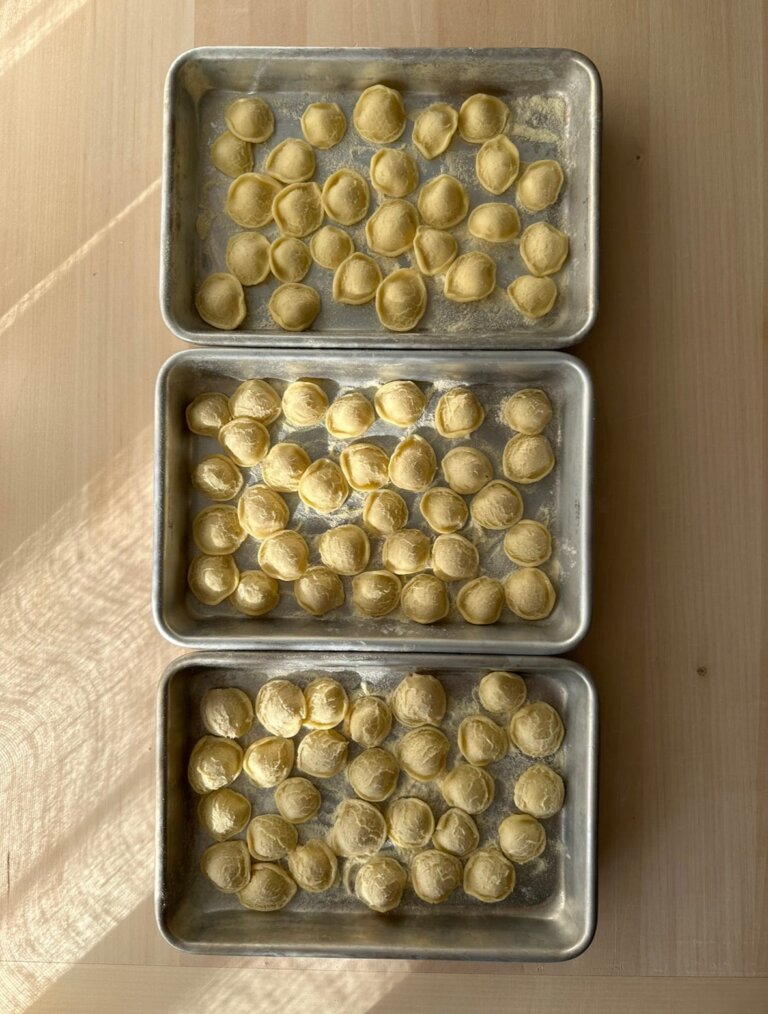
- Once you've laminated all of your dough with herbs, then you can cut these into whatever shape you like – or use for stuffed pasta.