
Lahmajun (Armenian pizza)
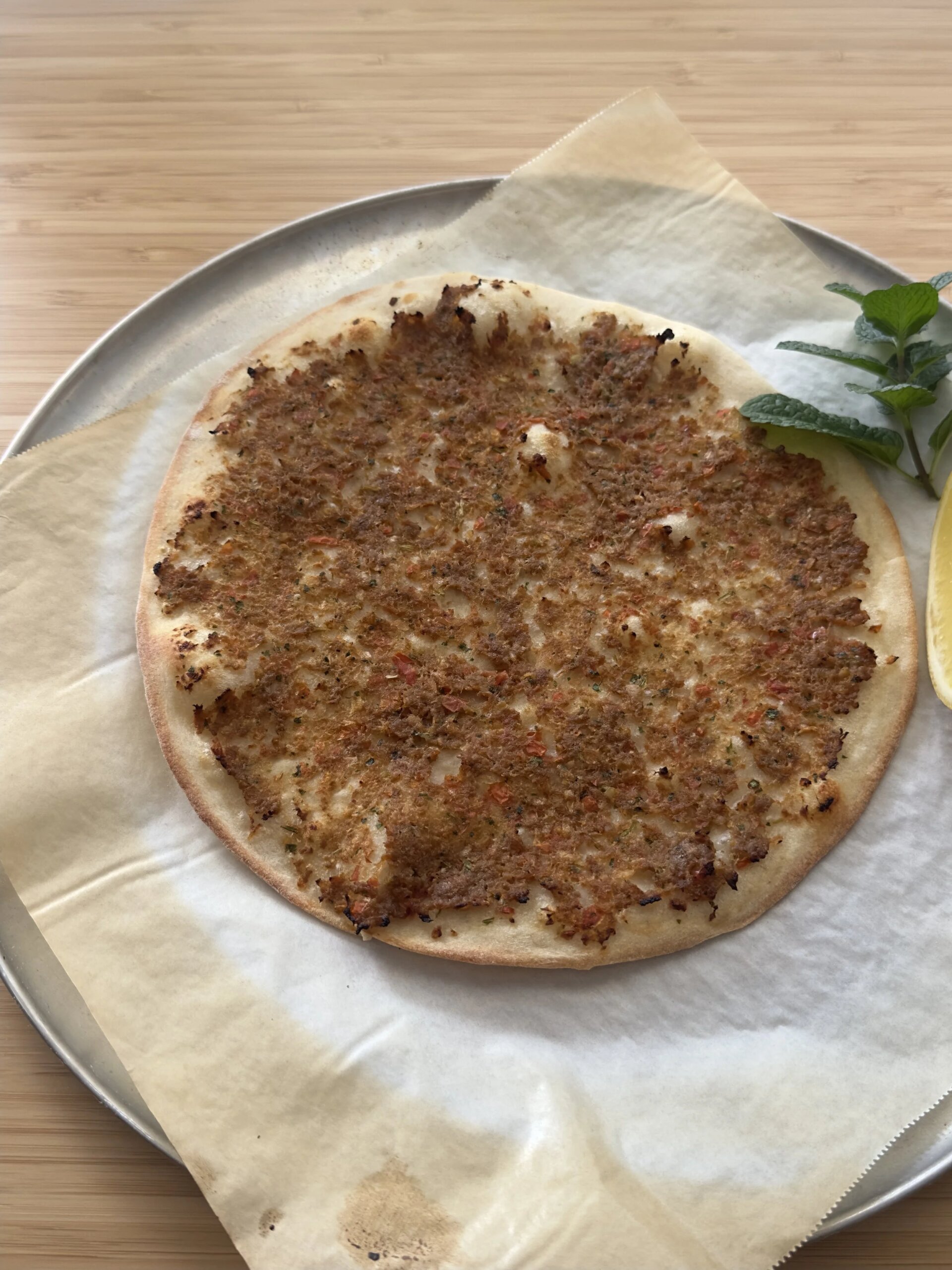
Eating lahmajun in my grandma’s kitchen in Cyprus is a core memory for me. I remember that she’d make the meat mixture and drop it off at the Armenian bakery in Lefkosia (aka Nicosia in English, the capital city of Cyprus), and around lunchtime my grandpa would return home with a stack of lahmajun, wrapped in foil, and we’d sit around the table, squeeze over some lemon and wrap each one up. I always asked why she’d only make the topping and the answer was always: it’s a lot of work to make it from scratch.
My grandma developed alzeihmer’s before I could learn any of her recipes – which is honestly so heartbreaking, especially as she was well known in our family for being a fabulous cook – so teaching myself how to make lahmajun has truly been a labour of love and test of memory.
I did the rounds with family, asking cousins in the know if we had a family recipe that I could work from, but like many family recipes, they exist in mind and not on paper. When it comes to cooking recipes from my heritage, I’m often guided by memory and personal accounts and verification from family. All of this is to say that this went through a number of different rounds of testing before I got it right. This version tastes like a memory, and so I’m excited to share it with you.
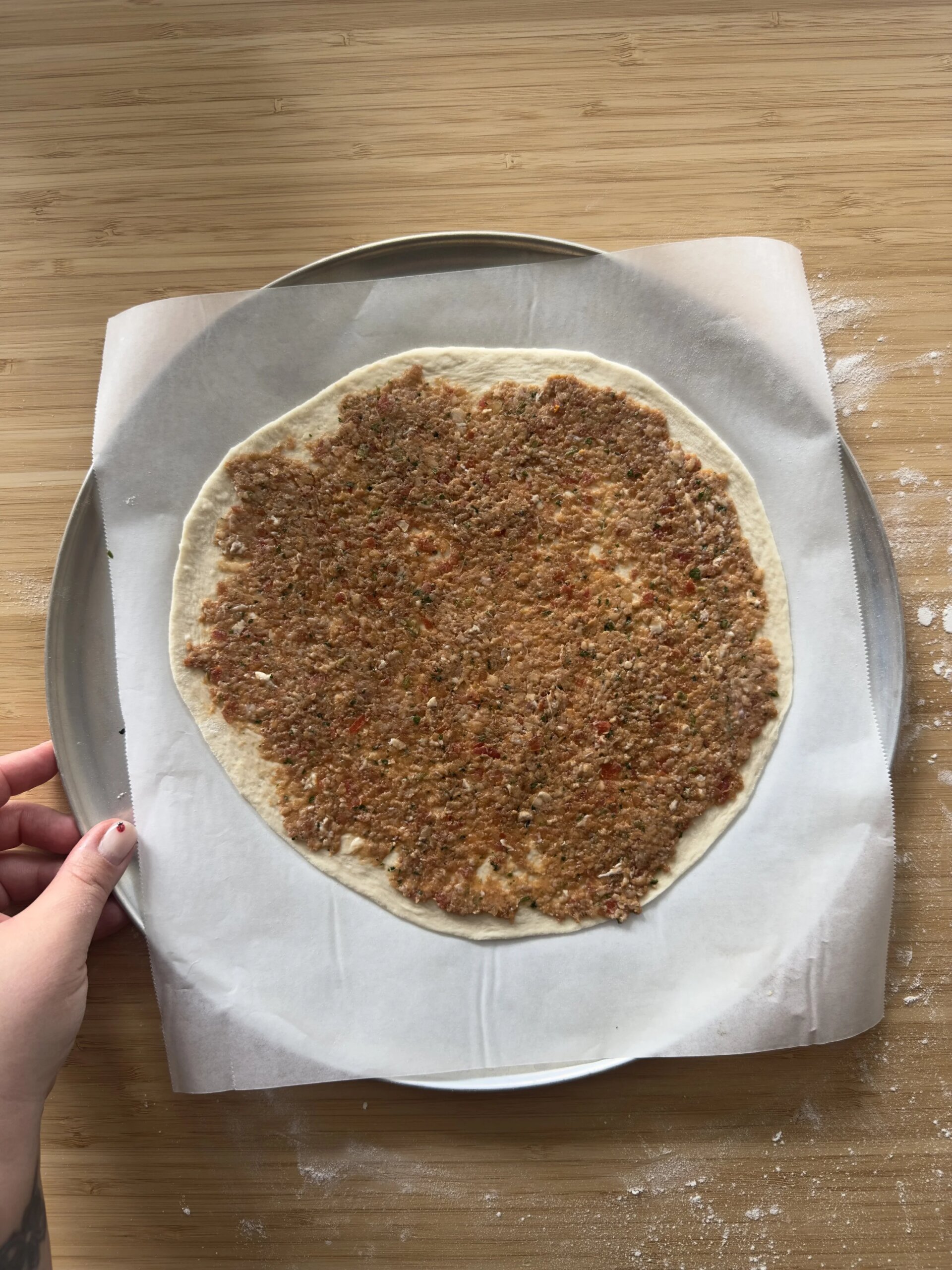
A note on lahmajun and its representation on social media among creators – I have often seen lahmajun being baked in a pizza oven at incredibly high temperatures, yielding a very puffy and airy result. I have also tested this at home, and can confirm that you will have much better results cooking this at a high heat in your regular home oven, which results in a much better texture that’s more accurate to how a lahmajun should be. The cooked dough should be quite thin, slightly crispy on the bottom, and able to be rolled up. It should not be like a Neopolitan-style pizza.