
Lahmajun (Armenian pizza)
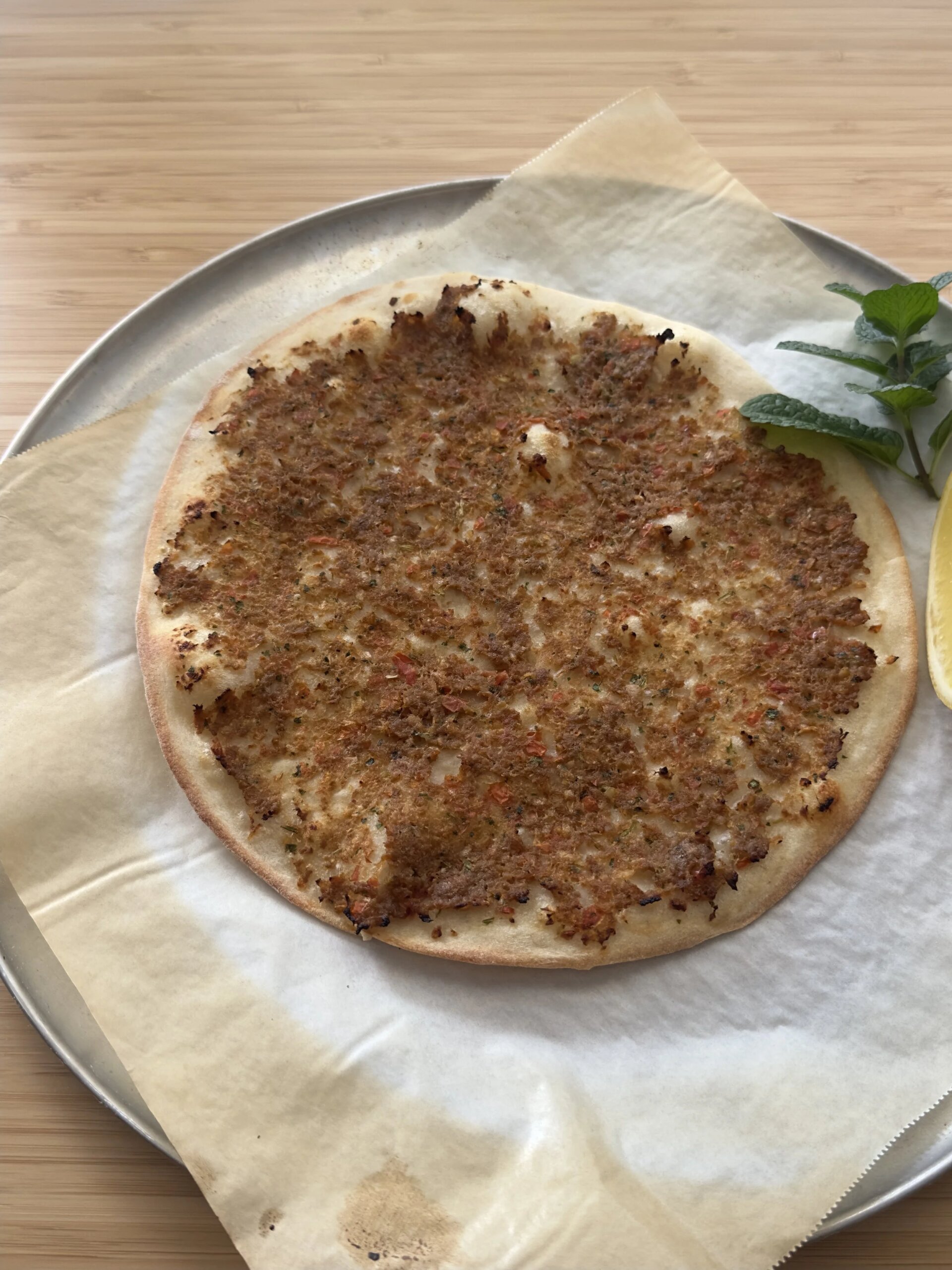
Inspired by the flatbreads my grandma made growing up, this Armenian lahmajun recipe is my from-scratch recreation of the version I remember eating around her table. Sometimes called Armenian pizza, lahmajun is a thin, crisp flatbread topped with a flavorful mixture of minced meat, tomato, onion, parsley, and warm spices, then baked until crisp around the edges.
This page contains affiliate links. I earn a small commission when you purchase through an affiliate link, at no extra cost to you. I appreciate your support!
Eating lahmajun in my grandma’s kitchen in Cyprus is a core memory for me. She’d prepare the meat topping and take it to an Armenian bakery in Lefkosia, then my grandpa would return around lunchtime with a stack wrapped in foil. We’d squeeze lemon over each one, roll them up, and eat. My grandma developed Alzheimer’s before I had the chance to learn her recipes, so with no written recipe to follow, I relied on memories, conversations with relatives, and plenty of testing to recreate the lahmajun I remembered.
You’ll also see lahmajun spelled lahmacun, lahmajoun, lahmajune, or lehmejun, with variations found across Armenia, Turkey, Lebanon, Syria, and beyond. This recipe reflects the Armenian version I grew up eating in Cyprus, made completely from scratch with homemade dough and the spiced meat topping I remember from my grandma’s kitchen. If you love this one, my sini manti is another Armenian family recipe worth trying.
Is Lahmajun the Same as Pizza?
Lahmajun is often described as an Armenian pizza recipe, but the texture shouldn’t resemble a thick or puffy pizza crust.
I’ve often seen lahmajun on social media baked in pizza ovens at incredibly high temperatures, producing a very puffy and airy result. I’ve tested this method at home and found that a hot regular oven produces a texture much closer to the lahmajun I grew up eating.
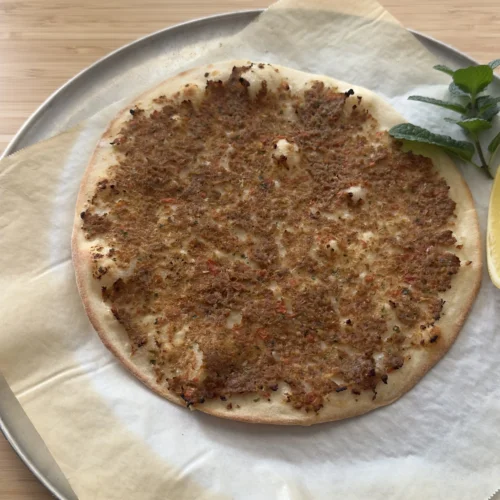
The cooked dough should be very thin, slightly crispy on the bottom, and flexible enough to roll up around the filling. It should not have the pillowy crust of a Neapolitan-style pizza.
Ingredients and Notes
- Old dough – A simple mixture of instant yeast, bread flour, and lukewarm water that ferments for a couple of hours before being added to the main dough. This develops flavour and helps create the right texture.
- Dough – Bread flour gives the dough enough strength to be rolled very thin without tearing. Lukewarm water, neutral oil, and salt help create a flatbread that’s slightly crisp on the bottom but still flexible enough to roll.
- Fresh tomatoes – I always remove the seeds before weighing and roughly chopping the tomatoes. This reduces excess moisture in the meat topping so the thin dough can crisp properly rather than becoming soggy.
- Brown onion – Adds savoury flavour and a touch of sweetness. It’s blitzed with the tomatoes and other topping ingredients, so there’s no need to finely dice it first.
- Herbs and spices – Fresh parsley, Aleppo pepper, sweet paprika, and ground cumin give the lahmajun its warm, gently spiced flavour. Aleppo pepper is a mild red pepper with a slightly fruity flavour and gentle heat. Both the parsley leaves and stems can be used.
- Garlic – Two fresh garlic cloves add plenty of savoury flavour to the meat topping. Since everything is blended in the food processor, I add the cloves whole.
- Neutral oil – Used in both the dough and meat topping without adding a strong competing flavour. Vegetable, canola, or grapeseed oil will all work well.
- Beef mince – Beef mince (ground beef) forms the base of the meat topping. It’s thoroughly combined with the tomato mixture until almost paste-like, making it easy to spread in a very thin, even layer over the dough.
A Note on the Dough
This dough recipe has been scaled and adapted from Lavash by Kate Leahy, John Lee and Ara Zada. This is such a fabulous book and one to add to your repertoire if you’re interested in food from Armenia and the Levant.
This version uses a traditional-style dough made from scratch with an old dough starter for flavour and structure. Unlike shortcut versions made with flour tortillas or store-bought pizza dough, it takes time to ferment and proof before being rolled incredibly thin.
It’s genuinely a project, but the resulting texture is worth the extra time: thin and slightly chewy, crisp around the edges, but sturdy and flexible enough to roll without cracking.
If you’re short on time, my easy overnight pizza dough can be rolled thinner than usual as a shortcut base. It won’t produce quite the same result, but it’ll get lahmajun on the table faster.
My Top Tips for Authentic Lahmajun
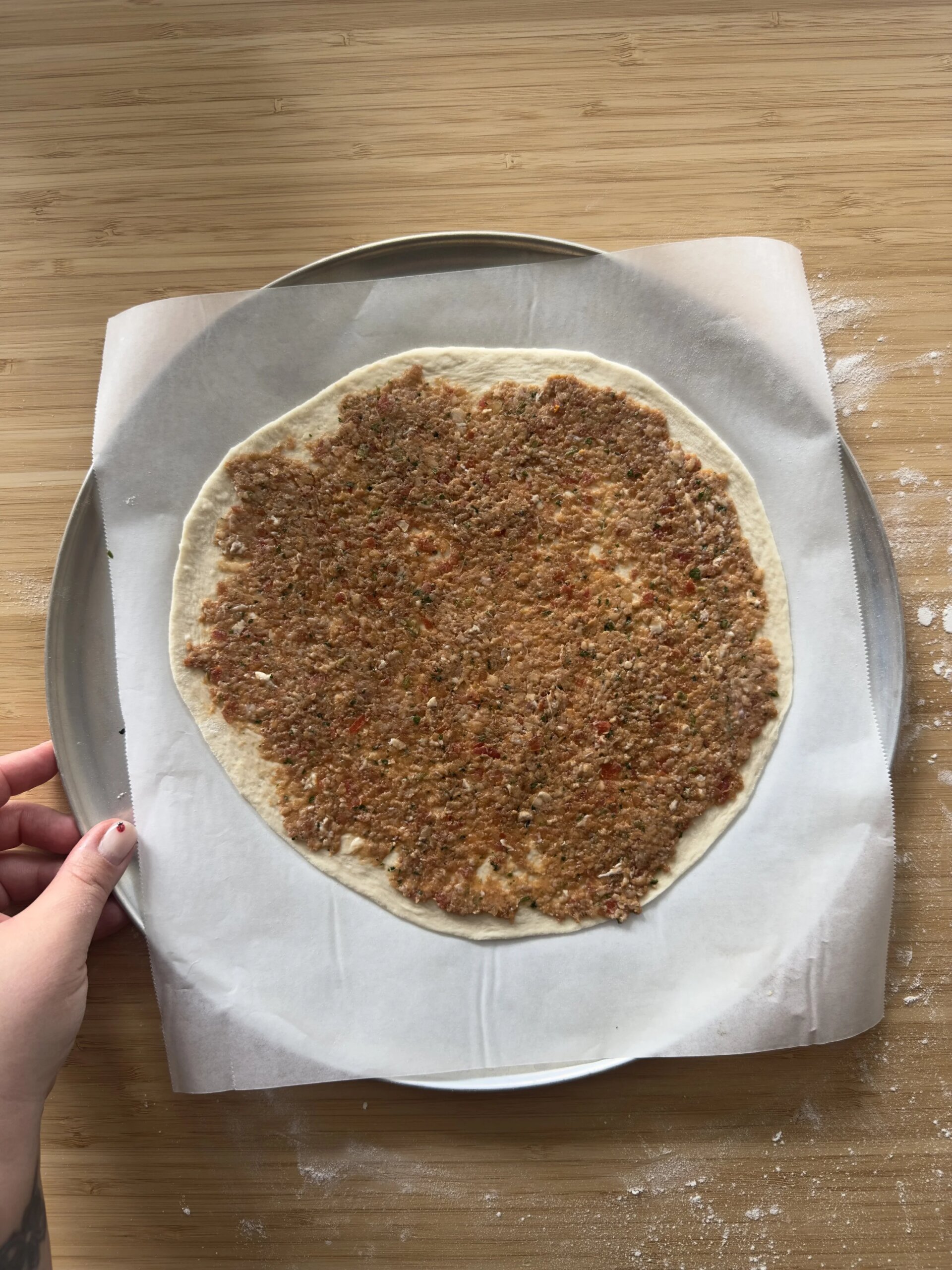
- Roll the dough very thin. Lahmajun shouldn’t have a thick, puffy pizza-style crust. Aim for about 25cm in diameter so the finished flatbread is thin and slightly crisp but still flexible enough to roll.
- Use a regular oven, not a pizza oven. After testing both methods, I found that a very hot home oven produces a texture much closer to the lahmajun I grew up eating.
- Preheat the baking tray. Leave the tray in the oven while it preheats so the bottom of the dough immediately hits a hot surface and begins to crisp.
- Don’t overload the topping. Spread just 2-3 tablespoons of the meat mixture into a very thin, even layer. Too much can prevent the meat from cooking quickly and leave the dough soggy.
- Remove the tomato seeds. This prevents the meat mixture from becoming too watery.
- Use parchment paper for easy transferring. Assemble each lahmajun on parchment paper so it’s easy to slide onto the hot baking tray without stretching or tearing the thin dough.
- Work assembly-line style. Since the lahmajun are baked one at a time, roll and top the next one while the previous one is in the oven.
- Stack them as they come out of the oven. Loosely covering the stack with foil keeps the lahmajun warm and pliable until serving.
- Plan ahead. There are several proofing stages, so this isn’t a last-minute recipe. For a head start, the dough can be refrigerated overnight after bulk fermentation.
Serving Suggestions
Growing up, lahmajun was always kept simple, served with a squeeze of lemon juice, then rolled up and eaten like a wrap. These days I like to build mine out a bit more, adding fresh mint, parsley, thinly sliced red onion, or whatever fresh salad ingredients I have on hand before rolling it up.
My ultimate crunchy green salad does the job perfectly here, or add a simple chopped tomato and cucumber salad. I also like a cooling yoghurt sauce, like the one from my spiced lamb meatballs, for dipping.
If serving lahmajun for a larger meal, set out lemon wedges, herbs, red onion, and a few fresh salad toppings and let everyone build their own, pairing the lahmajun with Eastern Mediterranean sides. Just don’t overfill them. Part of the beauty of lahmajun is being able to roll them up and eat them with your hands.
Storage and Reheating
Given how much time goes into making lahmajun, I almost always recommend making a full batch and saving the extras.
Store cooked lahmajun in the fridge for a few days, stacked with parchment paper between each one and kept in an airtight container or well wrapped.
They also freeze really well. Separate each lahmajun with parchment paper, stack them in a freezer-safe bag or container, and freeze for 2-3 months.
To reheat, wrap the lahmajun in foil and place in a 160°C fan/180°C oven for about 15 minutes, or until warmed through. Wrapping them helps prevent the thin flatbread from drying out or becoming overly crisp.
Lahmajun (Armenian Pizza)
Ingredients
Old dough
- 1/2 tsp instant yeast
- 150 g bread flour
- 150 ml lukewarm water 36-40c
Dough
- 513 ml lukewarm water 36-40c
- 2 tbsp neutral oil of choice
- 4 tsp salt
- 950 g bread flour
Meat topping
- 450 g fresh tomatoes seeds removed (this will yield roughly 300g), roughly chopped
- 1 medium sized brown onion roughly chopped
- 25 g parsley leaves and stems
- 2 garlic cloves
- 2 tbsp tomato paste
- 1 tbsp neutral oil of choice
- 1 tsp salt
- 1/2 tsp Aleppo pepper
- 1/2 tsp sweet paprika
- 1/4 tsp ground cumin
- 500 g beef mince
Instructions
Make the old dough
- Combine the above ingredients – it’ll be very wet. Cover with a damp tea towel or cling wrap and let it sit for 2 hours at room temperature until doubled in size.
Make the dough
- In the bowl of a stand mixer, combine the old dough, water, neutral oil and salt and mix with your hands or a spatula until roughly combined.
- Fit the mixer with the paddle attachment and add half the flour to the wet mixture, then mix on low until incorporated.
- Add the remaining flour and mix again – then cover the bowl and let it rest for 20 minutes to allow the flour to rehydrate.
- Switch to the dough hook attachment and knead the dough of medium speed until the dough is pulling away from the sides of the bowl and feel springy and smooth – around 3-4 minutes.
Bulk fermentation
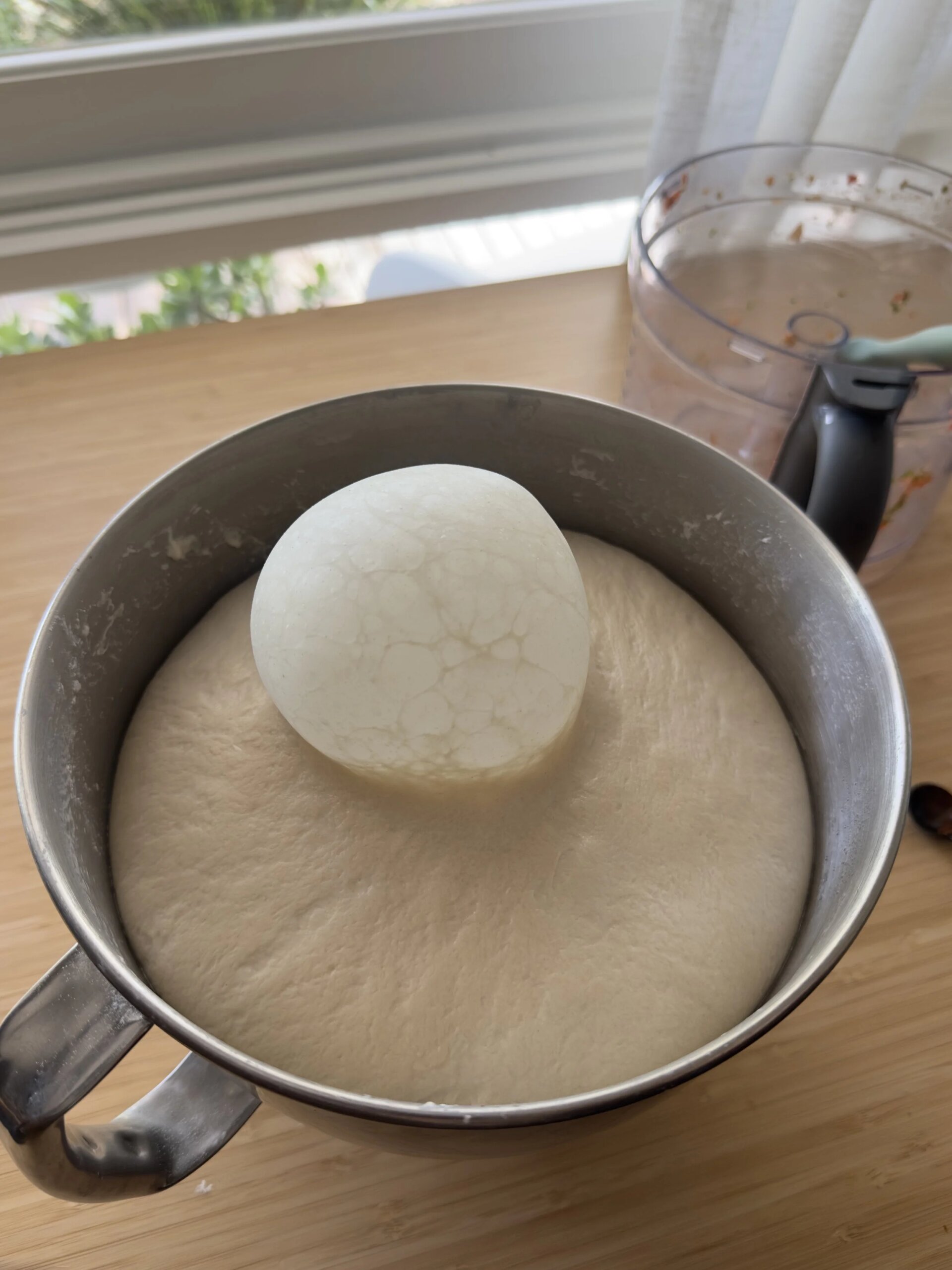
- Use a wet hand or a spatula to reposition the dough into the centre of the bowl, pulling the edges around tightly to roughly form a ball. Cover with cling wrap and rest for 2-3 hours or until doubled in volume.
- You can also place the dough into the fridge overnight – removing and allowing a couple of hours for the dough to come to temperature before portioning into balls.
Make the meat topping
- Combine all of the ingredients besides the mince in a food processor and blitz until you have a sort of paste.
- Place the mince in a large bowl, and pour over the tomato mixture. Use your hand to squeeze it all together until completely incorporated. Cover and refrigerate until ready to use.
Portioning the dough
- Once the dough has doubled in volume, knock back some of the air by punching the dough. Tip the dough out onto a work surface and portion into 16x 100g pieces.
- Roll each piece into a ball by stretching the left and right sides out and folding them to the centre, and repeating with the bottom and top sides facing you. Flip the piece of dough over so the seams are touching the table, then cup your palm around the dough and move your hand in a circle – causing friction between your palm and the table to tighten the dough into a ball.
Final proof
- Place the balls onto a lightly oiled baking tray, very lightly brush the tops of the balls with oil and cover with cling wrap. Allow a final proof of about 1 hour or until the balls have puffed up.
Preheat the oven
- Preheat the oven to as hot as it will go (for me that’s, 250c fan forced / 270c) and place a baking tray in there for you to cook the lahmajun on.
Shape the lahamjun
- Lightly dust your work surface with flour, place a dough ball in front of you and use your fingertips to gently pat the dough into a flat round. Then use a rolling pin to roll the dough into a very thin circle, about 25cm in diameter and just 0.5cm thick. Place this onto a sheet of parchment paper on a chopping board or another tray that you can use to launch the lahmajun into the oven.
- Top the dough with 2-3 tbsp of the meat mixture, using the back of a spoon to gently spread this out evenly over the surface of the dough – you don’t want this coverage to be too thick as it needs to cook quickly.
Cooking the lahmajun
- Then in one motion, quickly shuffle the parchment paper onto the preheated baking tray, and cook for around 6-8 minutes until the topping is cooked and the edges are slightly browned.
- While one lahmajun is baking, start preparing the next one as you will need to make one at a time – a labour of love!!
- Place the cooked lahmajun onto a serving tray, stacking them as you cook them – you can cover loosely with alfoil to keep them warm.
To serve
- Serve with lemon slices and fresh mint, or any sort of salad topping you like. Growing up we would simply squeeze over lemon juice and roll the lahmajun up, eating like a wrap. Now that I’m older, I do like to fill my lahmajun with herbs and salad, depending what I have around.
- Lahmajun are a great dish to make in advance, given how labour intensive it is. You can freeze them (separate each lajmajun with parchment, and store stacked in a ziplock), or store them in the fridge for a few days. To reheat, wrap in alfoil and place in a moderate oven – 160c fan or 180c – for 15 minutes or until warmed through.