
Classic lemon tart (tart au citron)
Lemon tart (tart au citron) is one of my all time favourite pastry desserts and this is my easy-to-follow take on the French classic! Featuring a pâte sucrée and vibrant lemon curd filling using Meyer lemons.
I’ve definitely been going through a bit of a sweet revival lately, and it’s been so nostalgic because in a prior life (aka my early 20s), I was definitely more of a sweet cook than a savoury one. I think the precision and science of baking and desserts is what makes it interesting to me, to the point where there was also a time when I almost enrolled in pastry school (kind of regret not doing that, actually!).
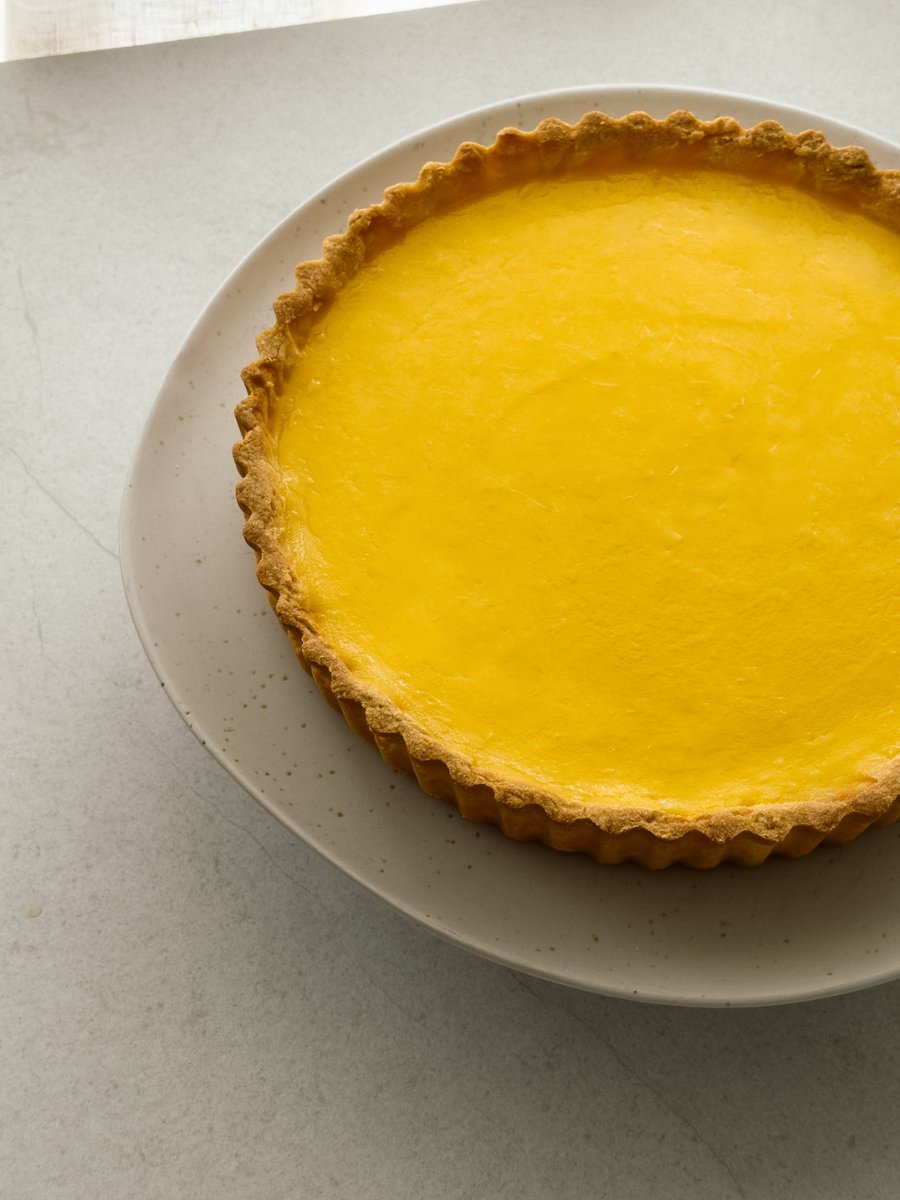
This lemon tart or tart au citron is my absolute favourite pastry dessert. I love using a classic lemon curd filling – it’s zesty and bright and has the most wonderful texture when set. Also, as far as pastry desserts go, I think this one is pretty easy! There might be a few steps involved but on a difficulty scale, I’d say this is suitable even for novice bakers.
So if you find yourself in possession of a number of lemons… give this one a go!


Why I love this classic lemon tart
- Perfect balance between sweet but tart – lemons bring a lovely tart note to an otherwise sweet dessert! It breaks through the sweetness and doesn’t end up sickly.
- Easy beginner’s pastry dessert – this is an approachable pastry dessert that’s perfect for even novice bakers. The dough comes together in one bowl with a spatula, the curd is made in one pan on the stove – all you need is a little time and patience!
- Tart shell can be prepped days in advance – you can easily make the tart shell in stages, or prep it up to three days in advance. See my tips and tricks below for more details.
- Celebrates winter citrus – lemons are bountiful in the winter months, and using them in this classic lemon tart is a fantastic way to enjoy them (especially if you have many to hand!).
Ingredients you’ll need to make it
- Unsalted butter – used in both the sweet pastry (pâte sucrée) and the lemon curd. I like to use unsalted butter purely so I can control the salt flavour in both components.
- Icing sugar – sifted into softened butter to form the base of the pâte sucrée. Sifting might feel like a faff, but trust me it’s worth doing so!
- Flour – all purpose flour is sifted into the butter/icing sugar mixture.
- Vanilla – adds a classic French touch to the pâte sucrée. Use a vanilla bean paste, or the seeds from one vanilla pod.
- Eggs – there are a lot of eggs in this recipe! Egg yolks are used in the pâte sucrée, adding a really luxurious texture and helps prevent the tart shell from shrinking during the blind bake. The lemon curd uses a combination of whole eggs and egg yolks, creating a gorgeous, vibrant yellow curd filling for the tart.
- Lemons – I like to use Meyer lemons if I can find them. They’re a cross between a lemon and a mandarin, are a little bit sweeter but still have a lovely sharp tartness.
- Caster sugar – used in the lemon curd to balance out the acidity.

How to make a classic lemon tart (step-by-step)
1. Make the pâte sucrée
Sift icing sugar into softened butter and mix well. Add the egg yolks, vanilla and a pinch of salt, then sift in the flour and bring it to a rough ball shape.
2. Chill the dough
Cover the dough with clingfilm and refrigerate for 1hour.


3. Roll the pastry
Place the chilled dough between two sheets of parchment and use a rolling pin to roll it out into a circle large enough to fill the base and sides of a fluted tart pan. Press the pastry into the sides of the pan, trim any excess and use a fork to dock the base all over.
4. Second chill
Place the tart pan into the freezer for 30 minutes while you preheat the oven.
5. Blind bake the pastry shell
Line the frozen pastry with parchment and fill with baking beans. Blind bake for 30-40 minutes until golden.


6. Make the lemon curd filling
Place all of the ingredients into a pan and place over a low-medium heat, whisking constantly until the curd has thickened. Strain the curd through a fine mesh sieve, then pour into your blind baked tart shell.


7. Bake the tart to set the filling
Bake at 180c for 8-10 minutes until the tart is just set. Cool entirely before serving.
Tips, tricks and substitutions
- Use other varieties of lemon, or lime – while not as sweet as a Meyer lemon variety, they bring a lovely tartness to this pastry. Consider increasing the amount of sugar in the curd to 200g.
- Chill the tart before serving – once then tart comes out of the oven it’ll still be very wobbly in the centre. It’s important to let it chill entirely before serving so you can get a clean slice, and the curd doesn’t ooze everywhere. I like to chill mine for a few hours or overnight in the fridge.
- Make the pastry shell in advance – you have a few options here! You can keep the unrolled pastry dough refrigerated for 2-3 days before rolling out into your tart pan. You can roll out the pastry, line the tart pan, dock it then freeze it until you’re ready to use (bonus, you can bake it directly from frozen), or blind bake the tart shell and keep it in an airtight container at room temperature (ready for filling) for up to 3 days.
Storing this classic lemon tart
I like to keep this in the fridge and serve cold! Cover with clingfilm and consume within 3-5 days.
Anyway, that’s about it for this lovely French pastry dessert! This is a really fun project, perfect for a weekend bake and I hope you love it. If you make it, please leave me a comment below to let me know how you found it – I love hearing from you!
And if you’re looking for some other sweet treats to sink your teeth into, here are a couple of my favourites below:
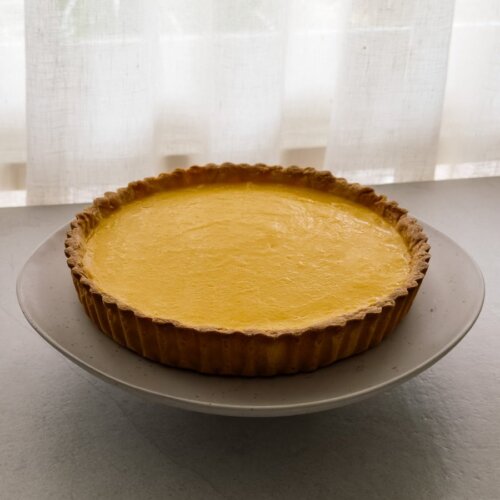
Classic lemon tart (tart au citron)
Equipment
- 22cm fluted tart/quiche pan
Ingredients
Sweet pastry dough (pâte sucrée)
- 110 g unsalted butter room temp and soft
- 100 g icing sugar
- 3 egg yolks approx 50g
- 1/2 tsp vanilla bean paste
- 240 g all purpose flour
- Pinch of salt
Lemon curd filling
- 250 ml lemon juice I like to use Meyer lemons as they’re a bit sweeter, but you can use other varieties too
- Zest of 1 lemon
- 175 g sugar
- 170 g unsalted butter cubed
- 4 whole eggs from large eggs
- 4 egg yolks from large eggs
Instructions
Pâte Sucrée
- In a large bowl, add the softened butter and sift in the icing sugar. Use a spatula to combine well. We don’t want to beat air into it, just create a smooth and thick butter/sugar mixture.
- Add the egg yolks and vanilla and use the spatula to combine. Then sift in the flour, and a pinch of salt.
- Once again use the spatula to combine until you have a crumbly mixture that stays together when you press it between your fingers.
- Tip the mixture out onto your work surface and gently bring it together with your hands to form a thick, round disc of dough.
- Cover with clingfilm and refrigerate for 1 hour.
- Remove from the fridge and allow to warm up for 5 minutes at room temperature before rolling out.
- Place the dough between two large sheets of parchment paper, and use a rolling pin to roll out the dough into a circle large enough for your fluted tin, approximately 4mm thick.
- Drape the dough over the tart tin and use your hands to press into the sides – it’s important to press the dough into the fluted sides to prevent shrinkage. If you have any gaps just take a piece of dough from the excess and patch it up.
- Use a rolling pin to cut off the excess dough by simply rolling it along the top of the tin.
- Dock the base of the tin with a fork, then cover lightly with clingfilm and freeze for 30-45 minutes.
- Meanwhile preheat your oven to 190c (170c fan forced / 365f).
- Bring the pastry case out of the freezer and line the inside with parchment paper, then fill with baking beans (I used dried beans and rice).
- Blind bake for 30 minutes, then remove the baking beans and parchment and return the pastry case to the oven for a further 5-10 minutes until the sides of the tart are golden and the base is set but still relatively pale.
- While the tart is blind baking, prepare the curd filling.
Lemon curd filling
- Combine all of the ingredients in a pan (any material but carbon steel), and whisk briefly to combine the eggs.
- Place over a medium heat and stirring almost constantly, cook the curd until it’s thick enough that when you drop some of the curd down it will leave a brief imprint behind – it should be thick enough to comfortably coat the back of a spoon.
- Strain the curd through a sieve, then add to your blind-baked pastry shell.
- Reduce the oven to 180c (160c fan forced / 355f) and bake in the centre of the oven for 8-10 minutes. The filling will still be quite wobbly in the centre but the edges should be just set.
- Allow the tart to cool entirely before serving. I like to refrigerate overnight – this allows the curd filling to completely set and become sliceable.