

The Best Roman Style Spaghetti Carbonara
A traditional recipe for the best Roman style spaghetti carbonara! Using only a handful of ingredients – eggs, guanciale, black pepper and pecorino Romano, this recipe will teach you how to make creamy, perfectly emulsified carbonara the proper way. Once you try my recipe, I promise you won’t make it any other way!

For anyone that has known me for even a small amount of time, they will know that carbonara is my death row dish. Salty, creamy, cheesy, carby goodness. You could say I am fanatic about carbonara. Which is why I heavily tested this recipe for the better part of 12 months before sharing with the world.
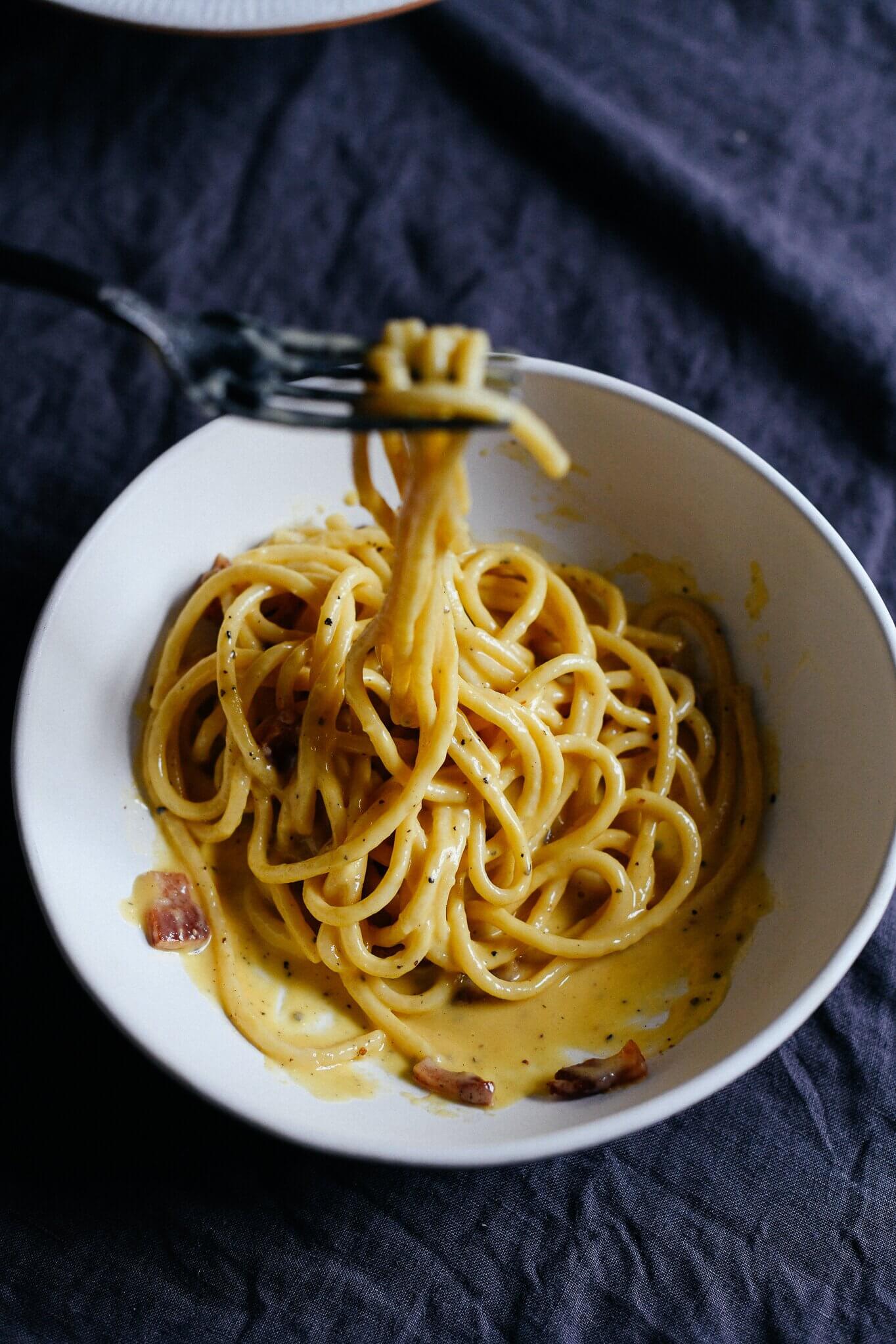
There are some incredibly strong opinions on carbonara: ingredients, how to make it, the type of pasta etc etc. I could go on but honestly the longer I spend writing this the longer it will take for me to publish the actual recipe so I will cut it short and just note that you only need four – yes, four – ingredients to make a proper carbonara and no, none of them are cream.
Guanciale, eggs, Pecorino Romano, black pepper.
The key to creaminess is utilizing the magic that is pasta water. Trust the process and trust your judgment. Although there are only a few ingredients, this is a somewhat technical dish, but an easy one once you’ve tried it.
Continue reading for my complete and comprehensive guide to making real spaghetti carbonara at home.
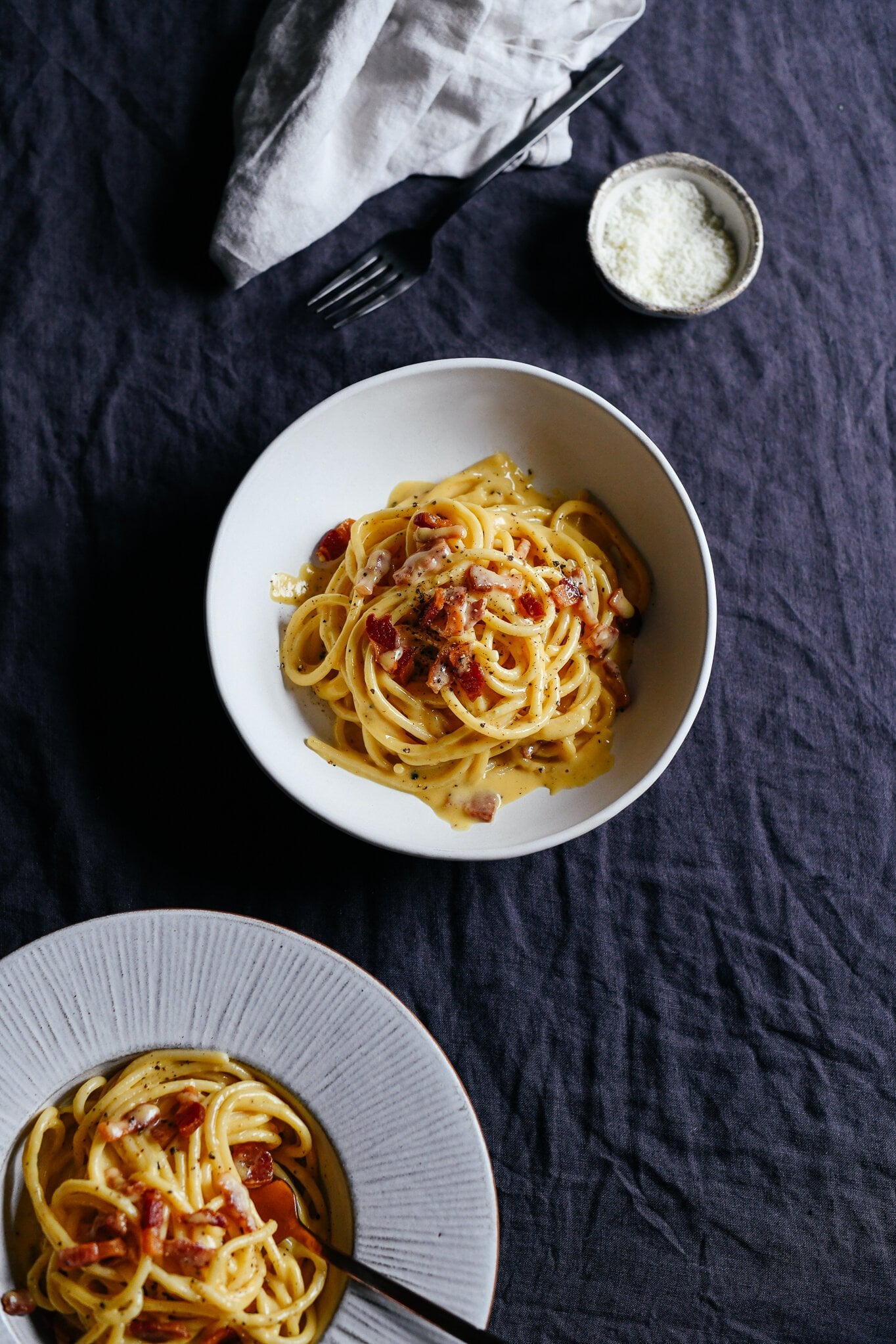
Why you’ll love this Roman-style carbonara recipe
- This is an authentic Roman technique made with no cream. My recipe will teach you how to make a perfectly creamy, emulsified sauce using just eggs, cheese and pasta cooking water.
- Quick to make, and perfect for any day of the week. The entire dish comes together in just 20 minutes with minimal prep.
- You only need 5 ingredients, with easy to make substitutions noted below!
- Perfect comfort food for any season – this is my favorite fall pasta, but it’s delicious year-round, too!
Ingredients you’ll need
- Good quality pasta, preferably bronze-die extruded – about 100-150g (3.5-5oz) per person, depending on the shape. For rigatoni I use 100g per person, spaghetti I use up to 150g per person – this is purely down to shape volume (hot tip for any pasta portion!).
- Guanciale – cured pork jowl and the traditional cut of meat used to make authentic carbonara. If you can’t find any, pancetta, speck or even cubed bacon would be the next best option (and often more economical).
- Eggs – use good quality eggs for best color and flavor. I always look at number of hens per hectare when choosing eggs, and preferably purchase from farms where hens are pasture-raised.
- Pecorino Romano – this sharp and flavorful cheese from the Lazio region is essential for carbonara – it has a distinct flavor profile, though you can substitute it for Parmigiano Reggiano or Grana Padano if you can’t find Pecorino Romano.
- Black pepper – freshly cracked from peppercorns, this adds that distinct peppery heat found in any good carbonara.
How to make this Roman-style carbonara recipe
1. Cook the pasta
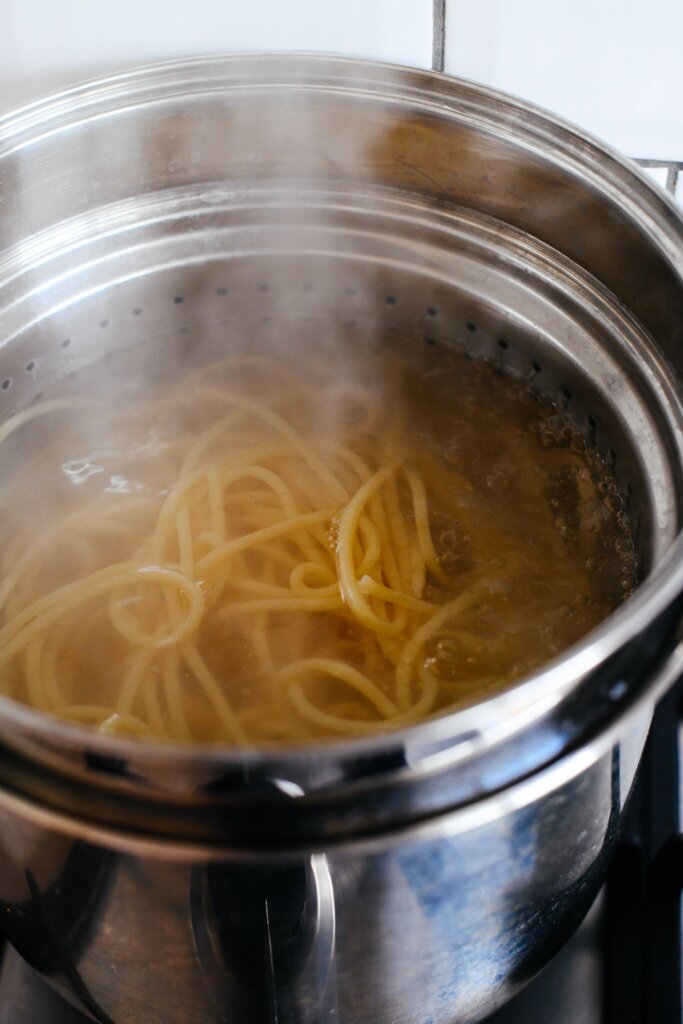
Bring a large pot of generously salted water to boil and cook your pasta until almost al dente.
2. Slowly render the guanciale
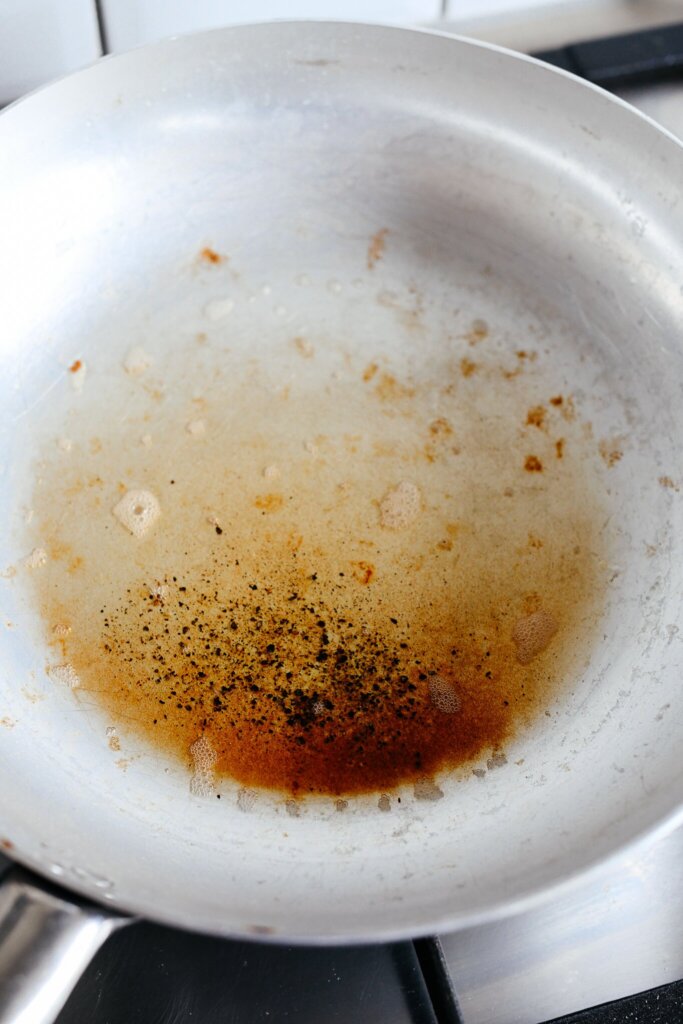
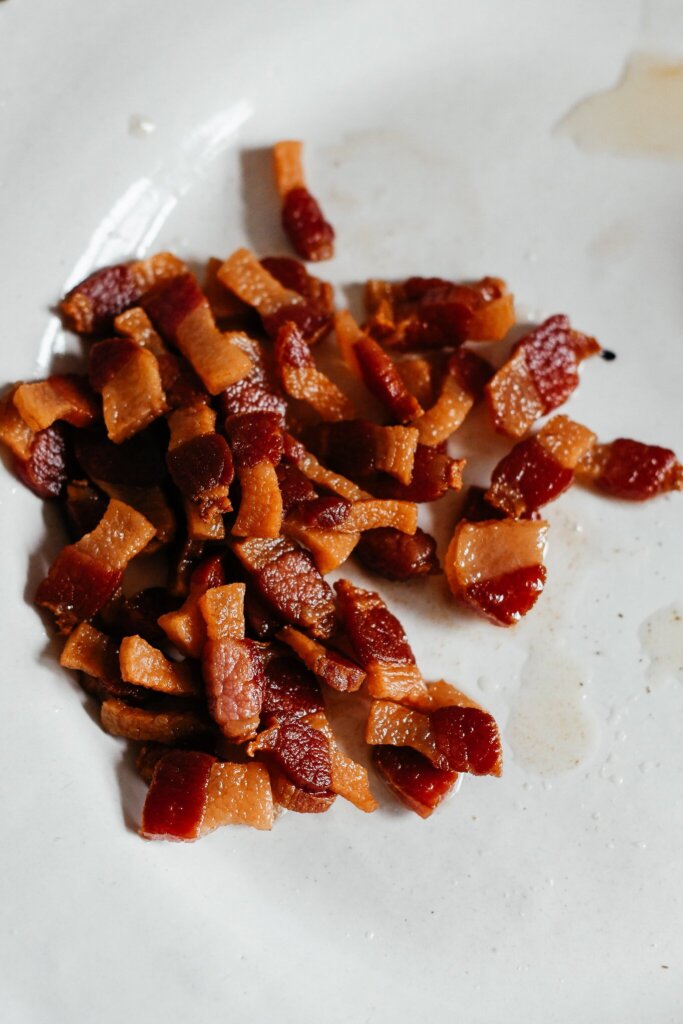
Meanwhile, cut the guanciale into small cubes and place into a cold pan. Slowly cook over a low-medium heat until crisp and the fat has rendered off. Turn off the heat and remove the guanciale from the pan with a slotted spoon, reserving its fat for later.
3. Prepare the egg mixture
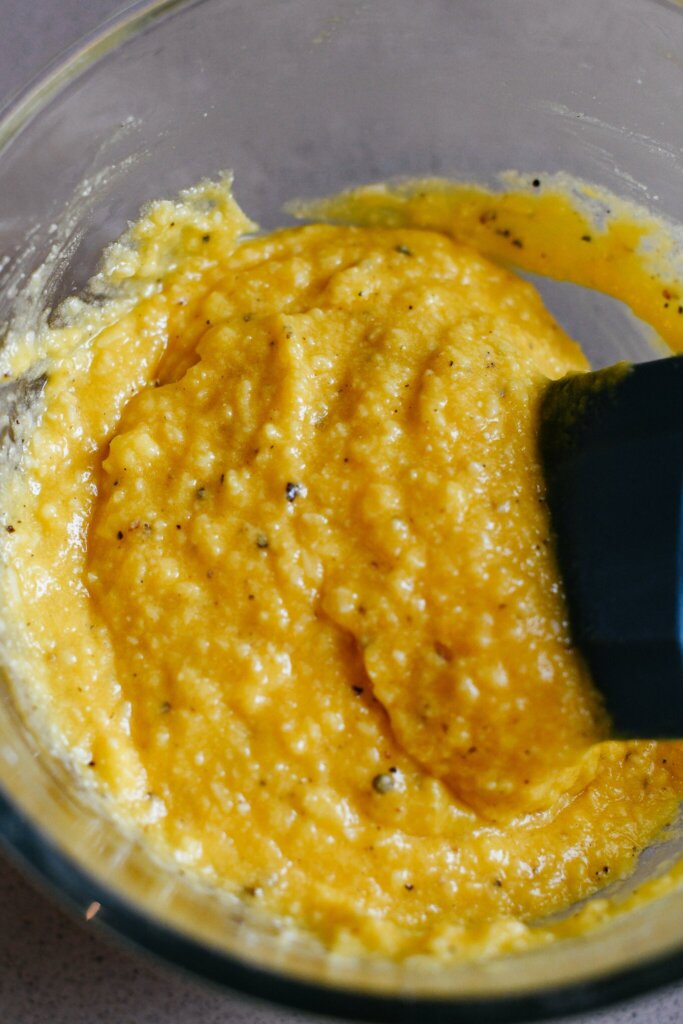
In a bowl, whisk together the eggs and egg yolks, finely grated pecorino, and a generous amount of freshly cracked black pepper.
4. Start forming your emulsion
Once the pasta is almost al dente, add it along with some of the pasta cooking water to the pan with guanciale fat, and place back over a low-medium heat.
5. Add the eggs to the pan
Add some of the hot pasta water to the bowl with the eggs to temper them – whisking vigorously – then taking the pan off the heat, add the tempered egg mixture to the pasta – stirring and tossing constantly. You can then reintroduce heat to thicken the sauce, or add more pasta water to thin it if it’s too thick.
6. Finishing touches
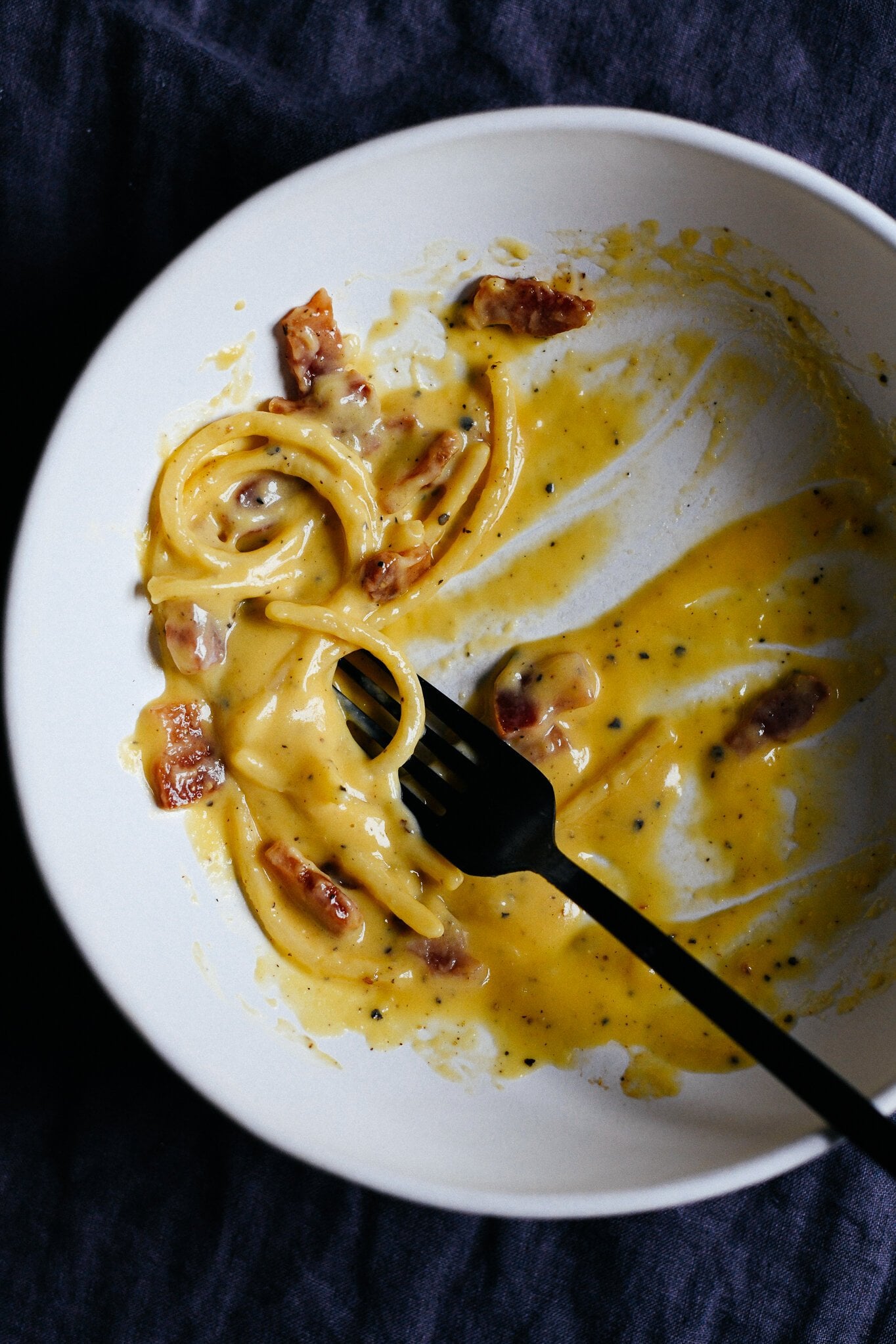
Serve immediately, with freshly cracked pepper and extra grated pecorino Romano.
Tips and tricks for making the best carbonara of your life
Use the smallest grater you can find
Finely grating the cheese helps it melt deliciously smoothly with the eggs and avoids any stringy, melted cheese bits in your sauce. I used the finest, powder grade on a box grater (that funny looking star-shaped spikey one!)
Temper your eggs
Adding pasta water to the eggs before adding to the pan will essentially do the job of tempering and help you avoid a scrambled egg situation. I find this step is essential in carbonara making territory. Think of it as preparing your eggs for the heat of the pan, so they’re not “shocked” when added – effectively this helps stabilize them.
Remember this is an emulsion
Carbonara is similar to an emulsion, where we’re combining water with fat and agitating it to form a stable sauce. And while there are a few different methods for bringing a carbonara sauce together, this is the most forgiving in my humble opinion.
I prefer to add a bit more water to the eggs to create a loose cream-like consistency, before adding to the pasta, then coaxing it into a luscious crema. You can always thicken a sauce, but you can’t fix a scrambled one. This process is similar to thickening a custard or béchamel sauce, just to give you a visual.
Pasta water is key
Make sure you keep extra pasta water on hand to lend itself to the sauce as needed, if you find it’s too thick and need to loosen it. This is your insurance!
Start the guanciale in a cold pan
And keep the heat low-medium. This is absolutely key in ensuring the fat from the guanciale renders properly, and creates perfectly crispy pieces, every time. If you add the guanciale to the hot pan, it’ll crisp up too quickly without rendering the fat properly, and will be at risk of burning if you’re not careful, too.
Serve immediately
Carbonara is best served immediately as the sauce will continue to thicken as it cools. If you are planning to serve this family style, I recommend taking it off the heat while it’s still just a touch too thin, so you don’t have a coagulated sauce when serving at the table.
Substitutions and variations
- Single serve option – if you are scaling this recipe down to serve one person, use one whole egg and one yolk only (no need to add an extra yolk for the pot with this portion).
- Scaling this recipe – this recipe scales easily. My rule of thumb is 1 egg and 1 egg yolk per person, 50g guanciale and 75g Pecorino Romano. Just make sure to add on that one extra yolk “for the pot” if you want to really add to the creamy factor of this dish!
- Pasta portions – this is a generously portioned recipe, but it’s easy to adjust the amount of pasta. Use anywhere between 100-150g pasta per person, just noting that the smaller the portion of pasta the more saucy it will be.
- Substitutions for guanciale – guanciale is a cured meat made from pork jowl/cheeks. If you can’t get hold of any, substitute it for pancetta, speck or even cubed bacon lardons. However if you can find it at a local deli, it’s worth it.
- Substitutions for Pecorino Romano – if you can’t get a hold of Pecorino Romano, you can substitute it for Parmigiano Reggiano or Grana Padano. While the flavor profile is a little different, you’ll still have a fantastic, delicious carbonara!
FAQs about this Roman-style carbonara recipe
Can I use bacon instead of guanciale?
While guanciale offers the most authentic flavor, if you can’t find any my next pick would be pancetta. However if you can’t find any of those, substitute for speck or cubed bacon lardons for an equally delicious result.
Can I add cream to this carbonara?
Cream really isn’t needed in this recipe! Traditional carbonara does not use cream, instead the creamy texture comes from the emulsion of eggs, cheese, fat and pasta water. Trust me, once you try this recipe you’ll never think of adding cream again – I promise.
What’s the best pasta shape for carbonara?
Spaghetti or rigatoni are most traditional, but any pasta shape can work here. I prefer to use a dry store-bought pasta over fresh pasta as they add more starch to the pasta water and thus the sauce, and I always like to buy a good-quality, bronze-die extruded artisanal pasta for best results.
How can I store this pasta for later?
If you have any leftover, you can store it in an airtight container in the fridge for up to 3 days. Save a small container of the starchy pasta water and refrigerate along with leftovers, then when you reheat you can loosen and re-emulsify the sauce with the cooking water.
This is by far my most popular recipe, and I can’t wait for you to try it. If you do, please let me know how you get on – I love seeing what you’ve made! Please tag me on Instagram or Pinterest 🙂
If you like this recipe, why not try my creamy saffron and sausage pasta, vodka sauce or check out this crunchy green salad for a wonderful side option!
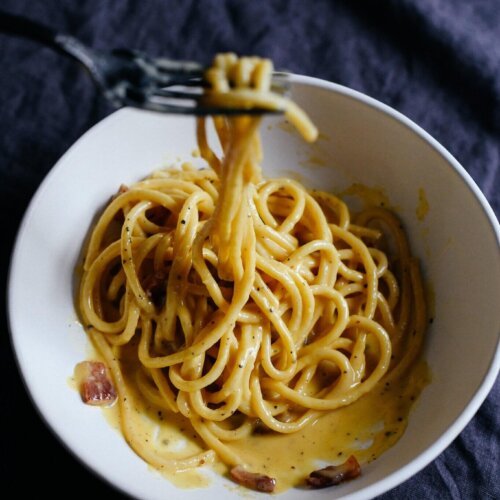
The Best Roman Style Carbonara
Ingredients
- 300 g spaghettoni pasta – spaghetti, bucatini or rigatoni will also work. If using rigatoni I suggest 100g per person (200g total)
- 100 g guanciale
- 2 whole eggs
- 3 egg yolks – this equates to 1 whole and 1 yolk pp, plus one for the pot for extra creamy goodness
- 150 g Pecorino Romano, very finely grated
- 1/2 tbsp freshly ground black peppercorns
Instructions
- Cut the hard skin off the guanciale, slice it lengthways into 1cm strips and then cut into 1 cm pieces.
- Bring a large pot of salted water to boil for your pasta.
- Add the guanciale to a cold pan and start to sauté over a gentle heat – no need to add any oil as its fat will melt.
- Meanwhile in a bowl add your eggs (whole and yolks) and beat well. Stir through the grated pecorino and a really decent amount of freshly cracked black pepper (depending on your tolerance and preference for pepper ~ measuring 1/2 tbsp). Set aside.
- When the guanciale is nice and crisp, turn off the heat and using a slotted spoon remove the guanciale from the pan and onto a plate – reserve the fat in the pan.
- Add the pasta to your boiling water and cook for approx a minute under packet instructions (just before it’s al dente).
- Add the pasta directly to the pan with the guanciale fat (reserving the pasta water) taking some of the pasta water with it. Turn the heat back on the lowest flame, and allow the pasta to continue to gently cook, giving it a toss in the guanciale fat.
THIS IS WHERE IT GETS INTERESTING! You will need to move relatively quickly.
- Add a 1/4 cup of the pasta water to the egg mixture and stir well until the pecorino and egg mix is nice and smooth and quite liquid, like pouring cream.
- Take the pan with the pasta/guanciale off the heat, pour in the egg mix and stir, toss and mix continuously until it starts to thicken slightly and you have a stable emulsion.
- At this point you can put the pan back onto a low heat/flame and keep stirring/moving constantly until you’ve worked the egg mixture into a beautiful crema, similar to béchamel in thickness. It’s important to keep the sauce moving constantly as you use the heat to thicken.
- Stir through the reserved guanciale before serving.
- Serve immediately!! With extra black pepper and a dusting of pecorino.


I love this recipe, it’s the only one I use. Works every time – the method of tempering the eggs with water first is genius!
Fantastic! Very authentic, we loved it!
Hi Sona,
Thanks so much for this lovely feedback! I’m glad you enjoyed this recipe 🙂
Gabriella
Soooooooo delicious. New go to!
Honestly, the best carbonara I’ve ever made! So simple and packed with flavour. Tasted restaurant quality, if I do say so myself. The instructions were really easy to follow and it came out absolutely perfect. Will 100% be making this again! Thank you!
The nicest carbonara I’ve eaten, let alone made for myself.
This is my go to! Whenever I make it everyone loves it, the ratios are just perfect and whole family pleaser. ❤️
Absolutely love this recipe and so straightforward to make
Yoooo. This one was so good. My wife and I made this at home on a Sunday recently. It was super easy to follow, and yes, no cream in Carbonara is the way! We loved it, so salty and delicious.
PerrrFECTION. Absolutely love this dish. Especially now it’s autumn in the UK. This’ll be a staple now!..x
This is the GOAT carbonara recipe. I’ve never once scrambled the eggs, I always get a silky, creamy sauce and it’s been a hit with all my guests. In a sea of carbonara recipes online, this one is always my go to
Hi Janelle,
Thank you so much for your rating! I’m so happy that you like making my recipe 🙂