
Beef short rib ragu
This beef short rib ragu is probably one of the most cooked recipes I’ve ever published. I originally developed it to pair with potato gnocchi, but over the years I’ve come to realise it’s just as special with short pasta or fresh pappardelle. So, I’ve split the two components out, leaving you with this glorious sauce. Choose your own adventure with the vessel you serve it with!
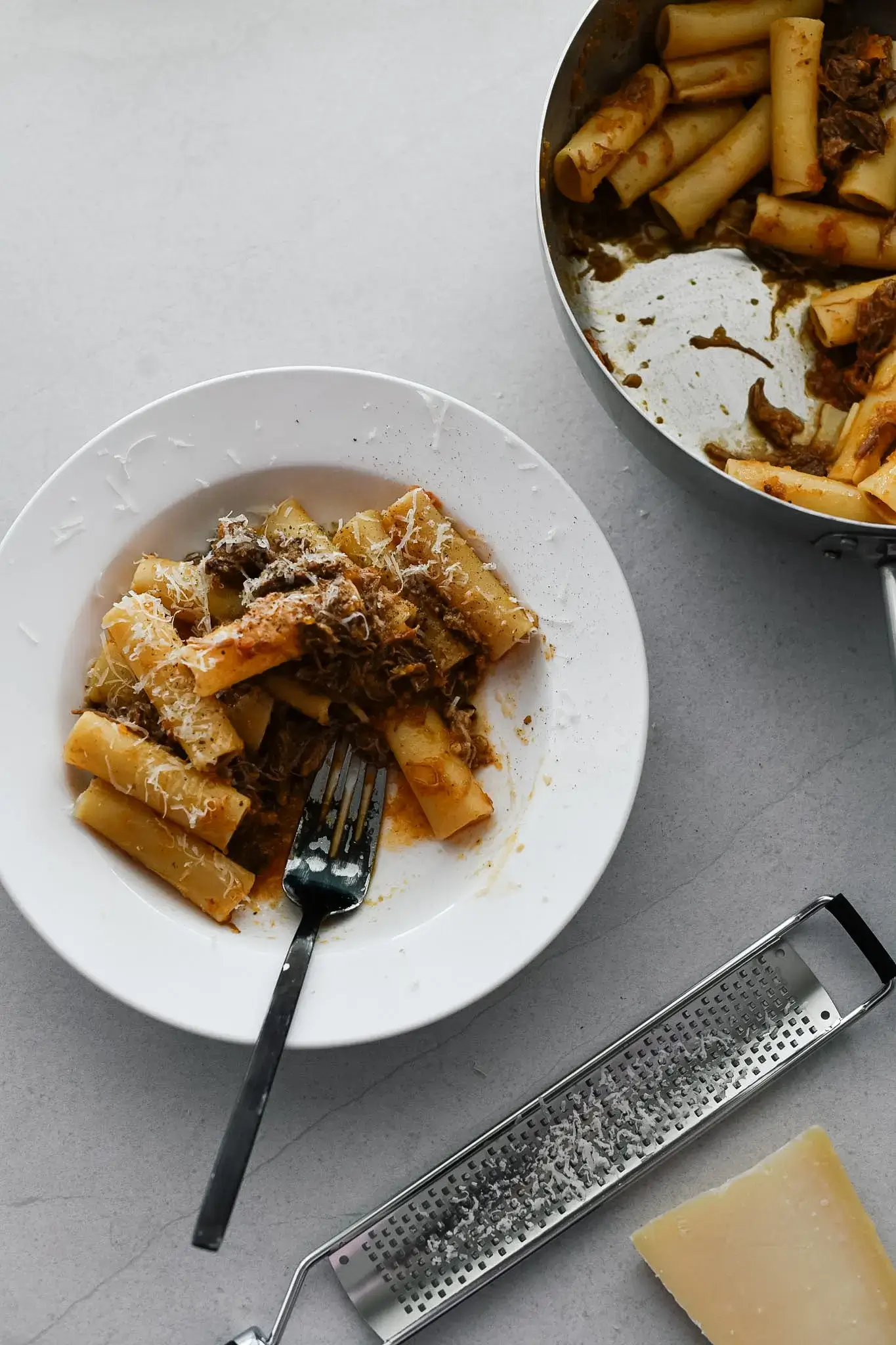
If you’re unfamiliar, ragu is a term that describes a rich, slowly simmered Italian meat sauce. The ultimate comfort food, it’s traditionally served with pasta, gnocchi, or polenta. More like a stew than a sauce, ragu is meant to be indulgent. It is made with various types of meat, but for this recipe, I stick with beef short ribs.
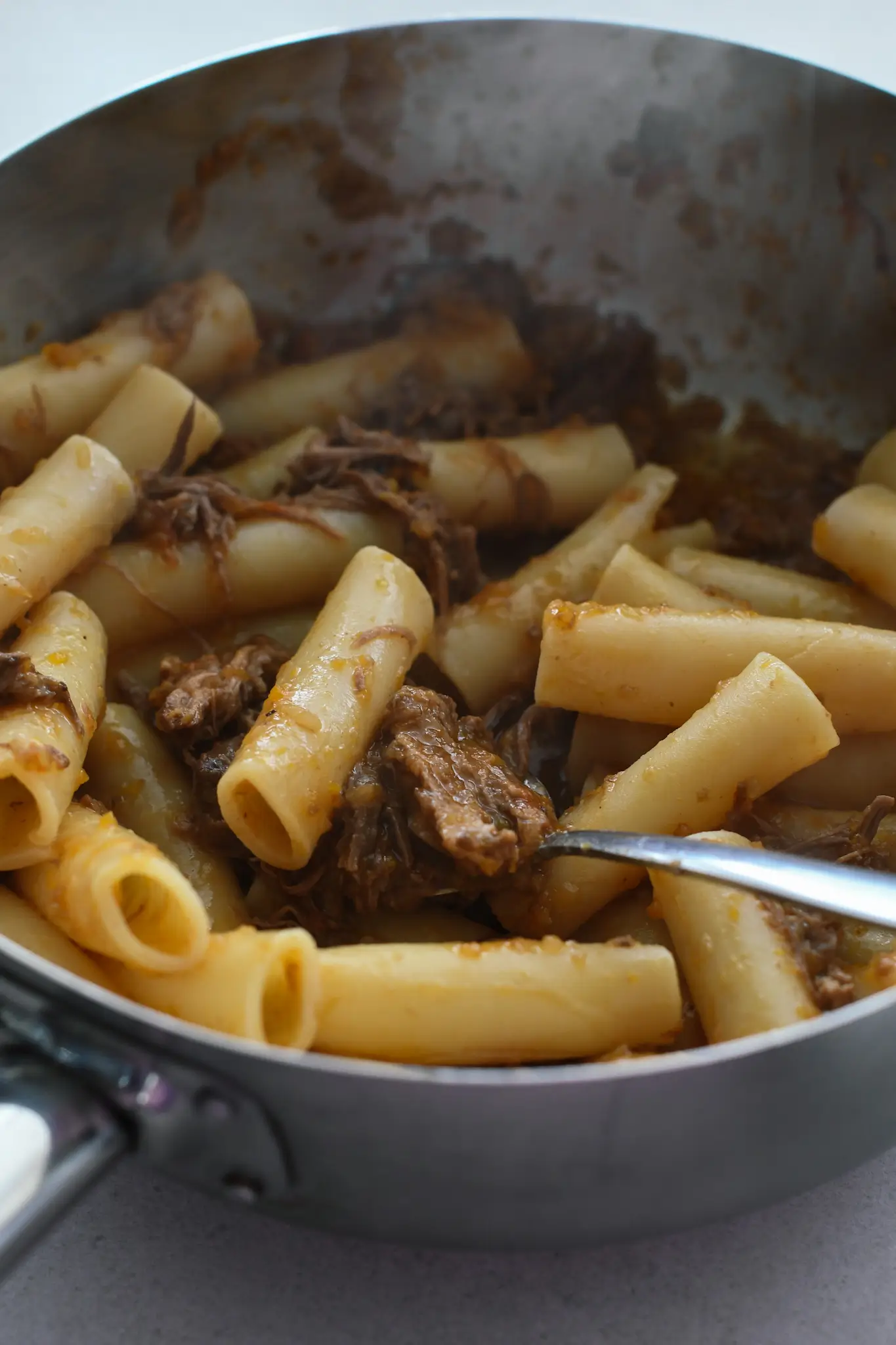
After a few hours of barely simmering away, the beef becomes fall-apart tender and practically melts into the rich, deeply savoury sauce. It requires a bit of patience, but very little hands-on work. Let the stove work its magic.
Short ribs aren’t the cheapest cut, but for an indulgent lunch they really are quite special. Plus, this recipe serves 6, and trust me when I say you’ll want the leftovers. The flavours only get better after a night in the fridge!
Ingredients You’ll Need
- Beef short ribs – The star of the show! I use bone-in beef short ribs, which become incredibly tender after a few hours of slow cooking. Ask your butcher to cut them into smaller pieces if needed, so they fit comfortably in your pan. You want the ribs to have enough room to properly brown rather than steam.
- Carrot, celery, brown onion + leek – These make up the vegetable base of the ragu. I blitz them together until they form a fine, almost paste-like consistency. This allows them to practically melt into the sauce as it cooks rather than leaving you with larger pieces of vegetables.
- Garlic – Four or five cloves, smashed. Measure with your heart.
- Tomato purée/paste – Let this caramelise in the pan for a minute before adding the liquids. It’s a small step but adds so much depth to the finished sauce.
- Red wine – I use Chianti, but another dry red wine that you enjoy drinking will work. There’s no need to use anything outrageously expensive, but please don’t use something you wouldn’t happily pour yourself a glass of. You can replace the wine with additional beef stock if preferred. The flavour won’t be exactly the same, but you’ll still end up with a delicious ragu.
- Beef stock – The main braising liquid and another layer of beefy goodness.
- San Marzano tomatoes – I strain the tomatoes from their juices for this recipe as there is already plenty of liquid from the wine and stock. Don’t throw the juice away though! Save it in the fridge or freezer for another sauce.
- Bay leaves – For a little extra aromatic flavour as everything slowly cooks away. Don’t skip these! They may seem insignificant, but you’ll notice if they aren’t there.
- Parmesan Rind – This is optional, but if you have one hanging around in your fridge or freezer, throw it in. It adds another layer of savoury, salty flavour to the ragu as it simmers.
- Parmigiano Reggiano – Stirred through at the end and, obviously, showered over the top when serving.
- Pasta – Dealer’s choice! Pappardelle and rigatoni are two of my favourites here, but there are plenty of options.
A Few Tips for the Best Beef Short Rib Ragu
- Don’t skip the sear. Pat the short ribs dry before seasoning them and adding them to a searing-hot pan. Moisture is the enemy of a good sear! Work in batches if you need to, rather than overcrowding the pan. You want plenty of deep, golden-brown colour on all sides because all of those caramelised bits are going to become part of your sauce.
- Don’t skip caramelising the tomato purée. Once your vegetables and garlic have cooked down, make a little space in the pan for the tomato purée. Let it cook for a minute or so before stirring it through the vegetables. You want it to darken slightly and caramelise rather than simply stirring raw tomato purée straight into the liquid.
- Keep it low and slow. Once everything is in the pan, bring it up to a boil before immediately turning the heat down to barely a simmer. And I really do mean barely! Short ribs need time for all of that connective tissue to break down and transform into the gloriously tender beef we’re after.
- Go by the beef, not just the clock. Three to three and a half hours is generally the sweet spot, but use the texture of the beef as your guide. The bones should pull away with practically no resistance, and the meat should be melt-in-your-mouth tender. If it’s still putting up a fight when you try to shred it, give it a little longer.
- Don’t panic about the fat. Short ribs are gloriously fatty, which is part of what makes this ragu so delicious. If there’s more oil sitting on top of your finished sauce than you’d like, gently lay a piece of paper towel over the surface to soak some of it up, then remove and discard.
Serving Suggestions
I originally paired my ragu with gnocchi, and I still love the combination. However, it’s also glorious with fresh pappardelle, rigatoni, or paccheri. Really, anything goes. Use my master pasta dough to make any shape you like best!
Whatever you choose, make sure to transfer your pasta directly into the ragu while it’s still al dente and toss everything together with a good handful of Parmigiano Reggiano. A splash of pasta water can help loosen everything up if needed.
Then, add a gremolata, like the one used in my pappardelle with ossobuco and gremolata. For a balanced meal, add a crunchy green salad, too. And, of course, you can never go wrong with sourdough bread to help scoop up every last drop.
Make Ahead and Storage
This short rib ragu tastes even better when prepared in advance. Not only do the flavours continue to develop in the fridge, but any excess fat will solidify on top, making it incredibly easy to remove if you’d like to.
Store leftover short rib ragu in an airtight container in the fridge for up to 3-4 days. I prefer storing the sauce separately from the pasta where possible, as it makes reheating much easier.
When you’re ready to eat, add a splash of water and gently reheat the ragu with the lid on, stirring occasionally. Cook your pasta fresh and toss it through the hot sauce just before serving.
You can also freeze the ragu on its own. Let it cool completely, transfer it to a freezer-safe container, and freeze for up to 3 months. Defrost overnight in the fridge before gently reheating on the stovetop.
FAQs
Can I use boneless short ribs?
Yes. I prefer bone-in short ribs because they add so much flavour as they braise, but boneless short ribs can be used if that’s what you can get your hands on. Keep an eye on the cooking time and, again, use tenderness rather than the clock as your guide.
Why are my short ribs still tough?
They probably just need more time! Short ribs start out as a relatively tough cut of beef and become tender as they slowly braise. If the meat doesn’t shred easily, put the lid back on and let everything simmer for a little longer.
What are the common mistakes when cooking short ribs?
The biggest mistakes are skipping a proper sear, overcrowding the pan, and rushing the cooking time. Keep the ragu at a gentle simmer and cook until the short ribs are fall-apart tender. If they’re still tough, they simply need more time.

Beef short rib ragu
Ingredients
Beef short rib ragu
- EVOO
- 1.4 kg beef short ribs as your butcher to cut them into smaller pieces so they can fit in your pan more easily, if you need to – roughly 6 pieces
- 1 carrot
- 2 celery sticks
- 1 brown onion
- 1 leek bitter green ends can be discarded or saved in the freezer for stock scraps
- 4-5 garlic cloves smashed
- 1 heaped tbsp tomato pureé/paste
- 200 ml red wine – I used Chianti for this recipe
- 400 ml beef stock
- 1 can San Marzano tomatoes strained of their juices (save the juices for another use!)
- 2 bay leaves
- Parmesan rind optional
- Big handful of grated Parmigiano Reggiano plus extra to serve
- Parsley to serve
- 500 g Pasta of choice
Instructions
- Bring the short ribs to room temperature and pat dry to remove any excess moisture. Season generously with salt and pepper.
- Blend the celery, carrot, onion and leeks to a fine paste-like texture and set aside.
- Add a couple of tablespoons of EVOO to a searing hot sauteuse pan (or a pan large enough to make the ragu) and brown the shorts ribs on all sides – remove from the pan and set aside.
- Add the blended vegetable mix to the same pan and sauté for a few minutes before adding the garlic.
- Make space in the pan and add the tomato pureé – let it cook/caramelise for a minute or so before stirring through the vegetables.
- Nestle the short ribs back into the pan, pour in the wine and reduce by 1/3.
- Add the beef stock, tomatoes, bay leaves and parmesan rind if using, bring to a boil then reduce to barely a simmer – cover and gently cook away for 3-3.5 hours.
- After this time the meat should be completely tender – melt in your mouth – and the bones should pull out with complete ease.
- After removing the bones, shred the meat while still in the pan with two forks – discard the bay leaves and parmesan rind. Season to taste.
- Bring a large pot of generously salted water to a gentle boil and cook your pasta until al dente. Transfer directly to the sauce.
- Add a smattering of grated Parmigiano directly to the ragu and toss to marry.
- Serve family style or divide between bowls – garnish with chopped parsley and extra grated Parmigiano, of course.