
Easy sourdough bread
Introducing my beginner-friendly sourdough bread recipe! Using a mix of strong white, wholemeal flour and sourdough starter, this recipe makes the perfect loaf of sourdough bread that has a custardy crumb and beautifully blistered crust. This is the only easy sourdough bread recipe you’ll need!

So I recently got into sourdough, despite some of my earlier claims. I know, I know – “I don’t F with sourdough” is probably one of my more infamous lines.
Did I want to make sourdough? Of course. Was I ever successful at making my own starter? Absolutely not. And it really turned me off. Then a good friend of mine gifted me some of her starter, and it lowered the barriers to entry drastically.
Historically I’ve always found the thought of caring for a starter incredibly daunting, but she explained things in such a way that made it feel like something I could maintain (thanks, Andrea! – check out her blog btw, her food is divine).
Anyway, since adopting Dough Master 5000, I’ve been head first into trying to bake a beautiful sourdough loaf and after some trial and error, reddit rabbit holes and research, I’ve landed on this recipe, which I’ve been rinsing and repeating for a few weeks now.
It’s got a lovely, custardy crumb and is simple enough to make – you just need to commit to 3.5 hours of intermittent hands-on time up front, then it’s pretty much left to do it’s thing.

Since sharing this loaf, I have received countless requests for the recipe, and now that I’ve had the chance to test it more thoroughly and feel confident that it can be recreated consistently, I’m happy to share.
Why You’ll Love This Beginner Sourdough Recipe
- Approachable for beginners – no over-complicated bakery lingo – just clear, practical steps designed to get you to that beautiful loaf.
- Custardy crumb – the high-hydration creates an interior that is incredibly soft, glossy, and moist, rather than dry and dense.
- Complex sourdough flavour – a slow, overnight cold ferment in the fridge allows the wild acids to develop gently, producing a perfect tangy depth.
- Excellent for toast and sandwiches – trust me, this is the best part. I think the mix of white and wholemeal flour gives the loaf a really delicious and sturdy crust and crumb, perfect for sandwiches.
Ingredients You’ll Need for an Artisanal Loaf
- Active sourdough starter – 120g of peak, bubbly starter. I highly recommend feeding your starter the night before so it’s active and ready to go first thing in the morning.
- Strong white bread flour – 400g of high-protein flour (ideally 12-14% protein content). This forms the elastic gluten network required to lift the bread and trap air pockets.
- Wholemeal bread flour – 200g of wholemeal flours adds a lovely rustic colour and a nuttier flavour profile.
- Water – divided into a main 420ml portion for the initial mix and an extra 10ml to help dissolve the salt later on.
- Fine sea salt – 12g to season the dough beautifully and tighten the gluten structure.
- Semolina or rice flour – for dusting your proving basket (banneton) to ensure your dough slips out smoothly without sticking after the cold ferment.
Step-by-Step Instructions
1. The Fermentolyse (60 minutes)
In a large mixing bowl, combine your 120g of active starter, 420ml of water, and both the white and wholemeal bread flours. Mix for a couple of minutes either by hand or using a stand mixer fitted with a dough hook, until you have a shaggy mass. Cover the bowl and let it rest for 60 minutes.
2. Add the Salt and First Rest (30 minutes)
Sprinkle the 12g of fine sea salt evenly over the top of your rested dough, followed by the remaining 10ml of water. Use your fingers to press and dimple the liquids into the dough, then use a gentle scooping and slapping motion to fully incorporate the salt by hand. Once smooth, cover the bowl and set a timer for 30 minutes.
3. Stretch and Folds (2 hours)
To build strength in the dough without intense kneading, we need to perform a series of stretch and folds over the next two hours:
- Wet your hands with water to prevent sticking and scoop underneath one side of the dough.
- Stretch that portion upwards gently, then fold it over towards the centre of the bowl.
- Rotate the bowl 45 degrees and repeat until you have stretched all four sides.
- Finish with a Coil Fold: Slide both hands under the middle of the dough, lift it upwards so it uncoils from the bowl, and let it fold over onto itself as you lower it back down. Rotate 45 degrees and repeat once more.
- Cover the bowl, rest for 30 minutes, and repeat. Do this every 30 minutes for a total of 5 sets, or until the dough passes the windowpane test (detailed in the FAQs below).
4. The Bulk Ferment (TIME varies, ~4-5 hours)
Now, leave the covered dough completely alone to ferment. This is the trickiest part of the process because how long it takes is highly dependent on your environment and kitchen’s ambient temperature. In a room measuring roughly 21-23c, it typically takes me 4 to 5 hours. Look for a dough that has noticeably increased in volume, feels light and domed at the edges, and has visible air bubbles trapped just beneath the surface. You can also try the aliquot method (detailed in the recipe notes).
5. Pre-Shaping and Final Shape (35 minutes)
Gently tip the fermented dough out onto a clean, unfloured work surface. Pull the edges out slightly into a rough rectangle. Fold the right side to the middle, followed by the left side, then roll it from the top down to form a neat ball. Use a bench scraper to gently pull the dough ball across the counter towards you, creating surface tension on the outer skin. Let it rest uncovered on the counter for 30 minutes.
For the final shape, dust your banneton generously with semolina or rice flour. Flip the dough over and perform a final shape. Place the dough seam-side up into the banneton. To ensure a tight structure, “stitch” the dough by pinching the outer edges and pulling them across the centre.
6. Overnight Cold Ferment (9-16 hours)
Cover your banneton (a shower cap is perfect) and place it directly into the fridge overnight for a minimum of 9 hours. This cold environment halts the rising process but allows the wild bacteria to continue producing incredible flavour.
7. Scoring and Baking (1 hour 25 minutes)
The next morning, place a heavy cast iron Dutch oven or lidded casserole dish on the middle shelf of your oven. Preheat to 250c fan-forced (270c conventional – or as hot as it goes) for a full 40 minutes so the cast iron is thoroughly preheated.
Carefully tip your cold dough out of the banneton onto a sheet of baking paper. Using a sharp razor blade or a lame, score a deep, angled cut down the length of the loaf to allow it to expand beautifully. Lift the paper and transfer the loaf into your hot cast-iron pot. Spray the top generously with water, immediately close the lid, and bake for 25 minutes.
8. The Vent and Final Crisp
Remove the lid of your cast iron pan. Turn the oven down to 220c fan-forced (240c conventional) and return the open pot to the oven for another 20 minutes until the crust turns a deep brown. Remove from the oven and carefully transfer the loaf onto a wire rack.
Hot tip: Resist the temptation to cut into it immediately! Let the sourdough cool completely for 4 to 6 hours before slicing. The interior structure is still setting, and cutting it too early will turn the crumb gummy.
Frequently Asked Questions (FAQs)
What is the windowpane test for sourdough?
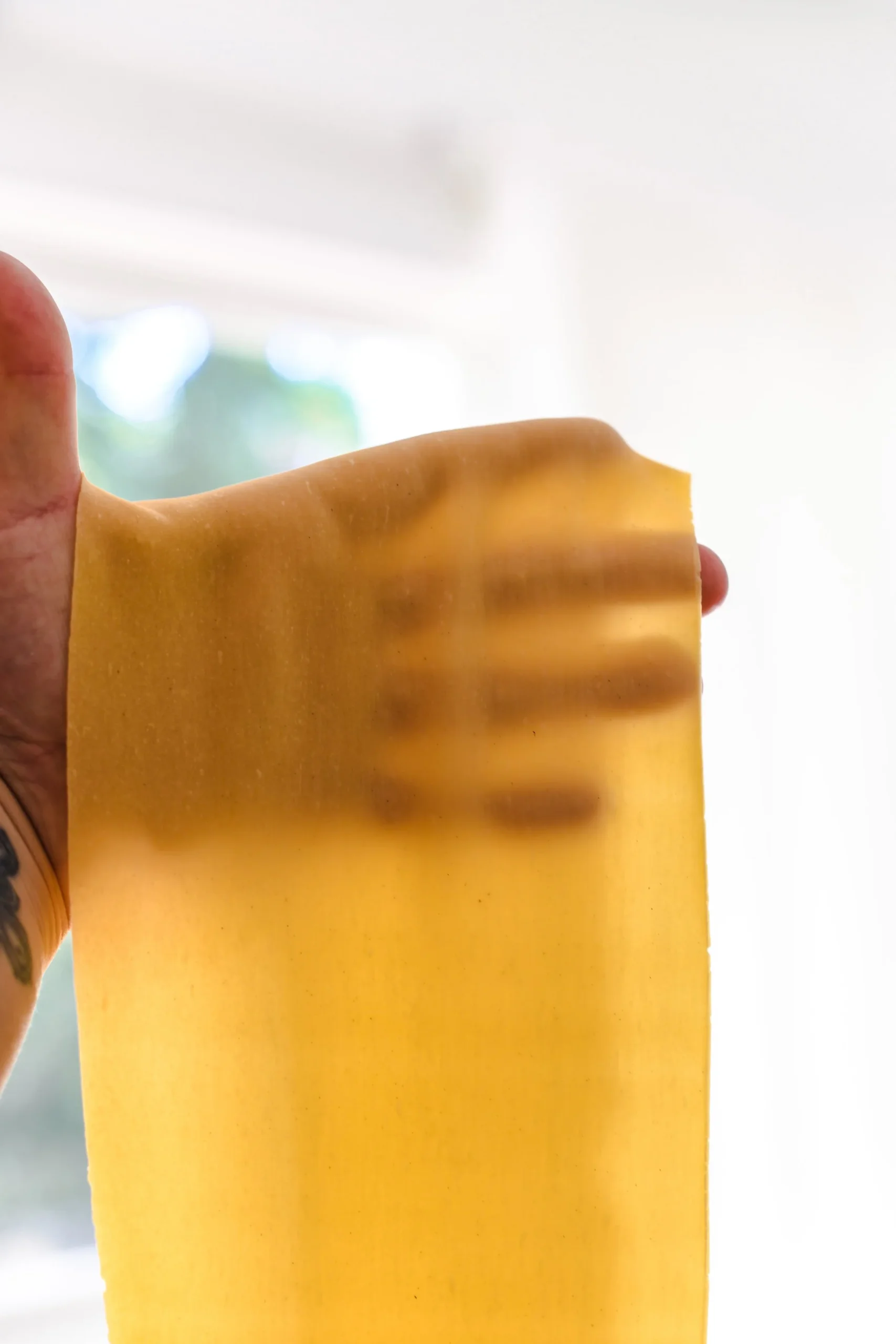
The windowpane test is a great way to check if your gluten network has developed enough strength during your stretch and folds. Take a small pinch of the dough and gently stretch it outwards between your thumbs and fingers. If you can stretch it thin enough to see light passing through it without the dough tearing, your gluten is perfectly developed. If it snaps quickly, it needs another rest and another set of folds.
What is the aliquot method or float test?
If you struggle to know when your bulk fermentation is complete, you can use a quick trick called the float test. Pinch a tiny piece of dough from your bowl and gently drop it into a small glass of room-temperature water. Once the dough rises and floats in the water, it’s a good indication that your dough has properly fermented – the dough will float when there is enough carbon dioxide trapped inside.
Why is my sourdough bread dense and flat?
A flat, heavy loaf usually stems from one of two culprits: weak gluten or incorrect fermentation. If you skip the stretch and folds, the dough won’t have the structure to hold its shape upwards and will spread sideways instead. Alternatively, if your kitchen is too cold, the dough may be under-proofed. Ensure your starter is active and bubbly before you begin mixing.
Anyway, that’s about it for this easy beginner’s sourdough bread! If you liked this recipe, why not check out my focaccia or ciabatta loaves?

Sourdough bread
Ingredients
- 120 g peak starter I feed mine the night before so I can start the process first thing in the morning to allow for a longer cold ferment before baking.
- 420 ml water
- 400 g white bread flour
- 200 g whole bread flour
- 12 g fine salt
- 10 ml water
- QB semolina flour for dusting the banneton
Instructions
Fermentolyse (60 minutes)
- Combine the starter, 420ml of water and both flours, mixing for a couple of minutes with a dough hook, or by hand until you have a shaggy mass.
- Cover and rest for 60 minutes.
Add salt and first rest (30 minutes)
- After the dough has rested, it's time to add the salt. Sprinkle over the salt on the top of the dough, followed by the remaining 10ml of water.
- Use your fingers to press/dimple it into the dough, then using a sort of scoop and slapping motion, mix it in by hand.
- Once the salt is incorporated into the dough, cover the bowl and set a timer for 30 minutes then start your first set of stretch and folds.
Stretch and folds (2 hours)
- Wet your hands with water and scoop underneath one side of the dough.
- Stretch that portion of the dough upwards, then fold it over towards the centre of the bowl.
- Rotate the bowl 45 degrees and repeat until you’ve gone around all sides of the dough.
- I like to then finish the set with two coil folds – carefully slide both hands under the dough and lift it up, before placing it back down.
- Rotate the bowl 45 degrees and repeat for a second coil fold.
- Cover the dough again, and let it rest for another 30 minutes before performing second set of stretch and folds.
- Repeat every 30 minutes until you've done 5 sets total, or until the dough passed the window pane test.
Bulk ferment (variable subject to your dough and envrionment – ~4-5 hours)
- Now it's time to bulk ferment – this is probably the trickiest bit to get right as it really depends on your environment. Personally I find from first mixing my dough to being ready for pre-shaping it will take around 7.5-8.5 hours depending on how cool it is. While testing my kitchen has recorded about 21-23c in temp.
Pre-shaping (35 minutes)
- Once the dough has had time to ferment (it should have increased in volume and bubbles will be visible under the surface of the dough), carefully tip it out onto a clean work surface and shape into a ball.
- Pull the sides of the dough out to form a rough rectangle, fold the right side to the middle, then the left side to the middle, then the top side to the bottom until the seams are now facing down.
- Place the bench scraper in your dominant hand, cup your other hand around the dough. Use your hand to help guide the dough, and the bench scraper to under and around the dough starting from the side closest to you, pulling back towards you when you reach the further side.
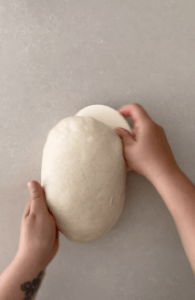
- Shape the dough however you wish – I have been enjoying the double caddy clasp method where you fold the left and right side of the dough to meet, then repeat the motion but now with the bottom and top ends.

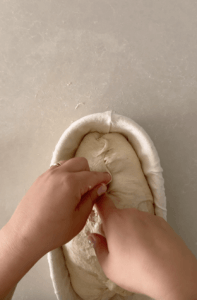
- Place the dough into a floured banneton – semolina or rice flour work really well here, and stitch the dough to tighten by pulling the outer edges of the dough to the centre and "stitching" them together.


Cold ferment (overnight – min 9 hours)
- Cover the banneton and place in the fridge overnight – I use a cloth cover but you could also use a clean shower cap.
Baking (1 hour 25 minutes)
- The next morning, preheat your cast iron pan in a 250c fan-forced (270c conventional/480f) oven for 40 minutes.
- Tip the dough out onto a sheet of parchment, score it and place in the preheated pan. Quickly spritz all over with water and place the lid back on and bake for 25 minutes.
- Remove the pan from the oven and take the lid off. Turn the oven down to 220c fan-forced (240c conventional / 425f) and return the bread to bake for another 20 minutes.
- Remove from the oven and allow to cool over 4-6 hours before slicing.