
Classic Lasagne
This classic lasagne recipe is one of those dishes I usually decide to dedicate an entire Sunday to making. It’s one of my favourite things to intuitively cook. With a rich pork and veal ragu, classic béchamel, beautifully golden sheets of fresh egg pasta and plenty of cheese, what’s not to love about it?
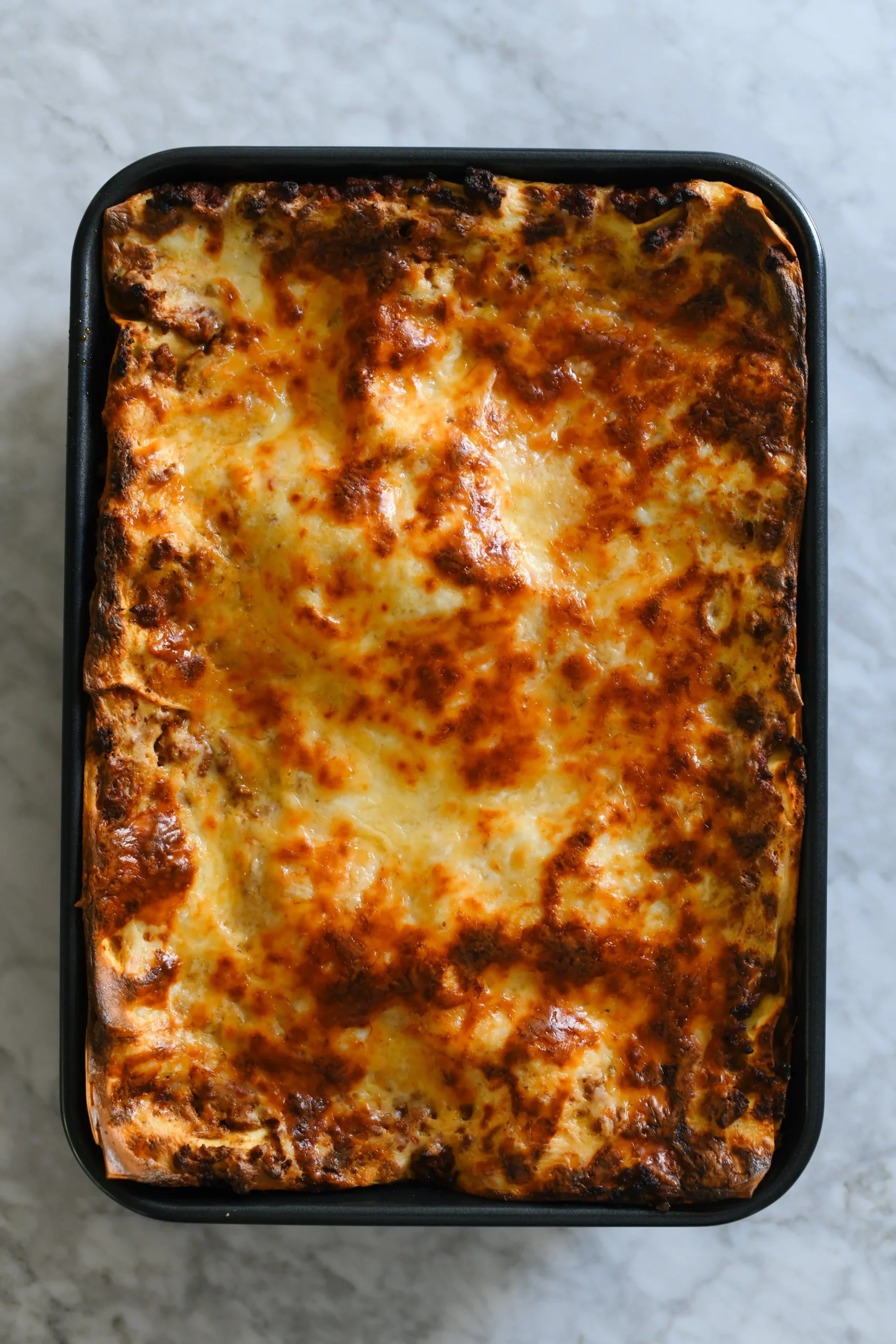
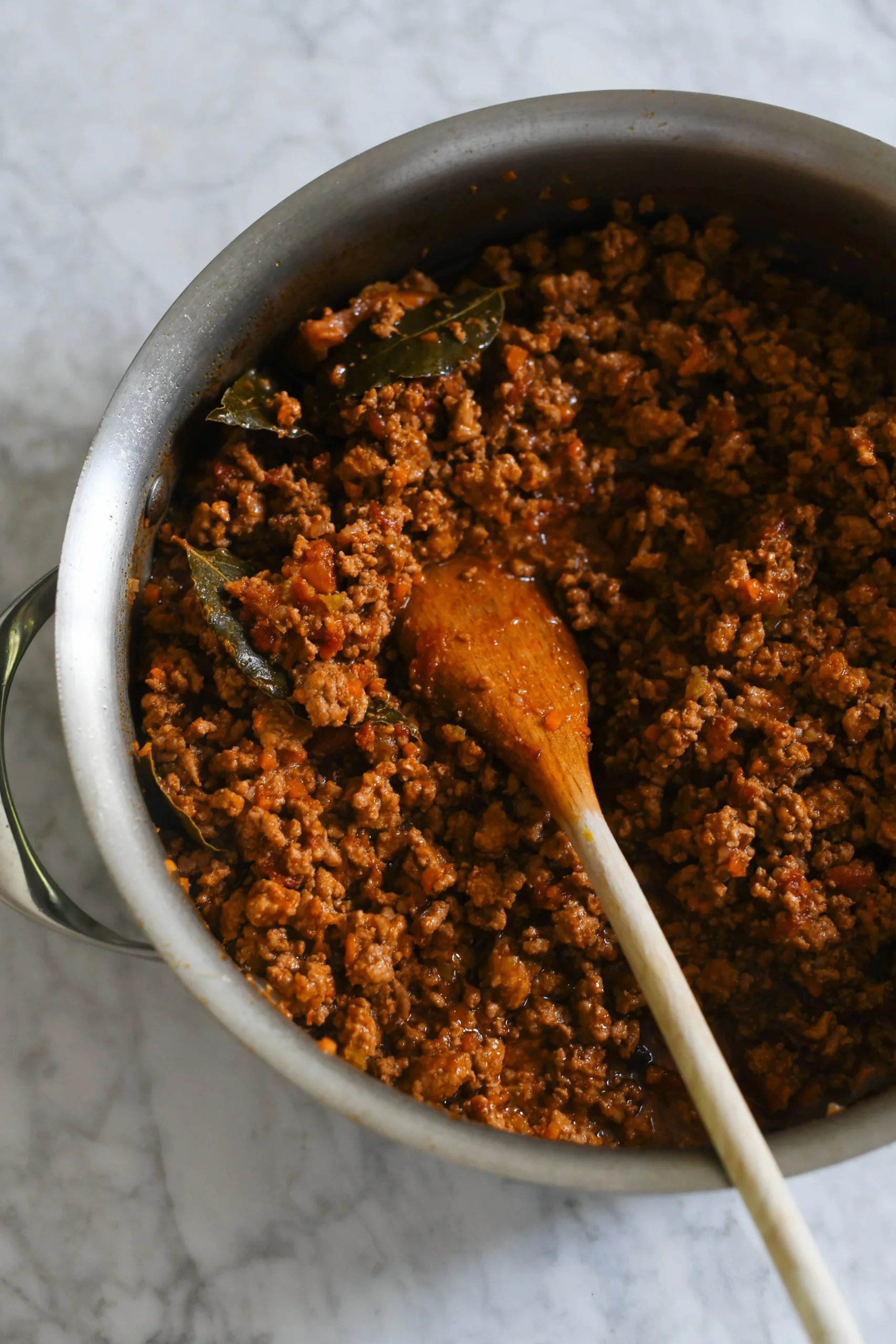
I’ve settled on this recipe as my go-to lasagne after making many iterations over the years. It’s not a proper, traditional Bolognese ragu, but rather a slightly simpler pork and veal version that relies on fewer ingredients without sacrificing any of that deep, slow-cooked flavour.
Layered with silky béchamel, mozzarella and plenty of Parmigiano Reggiano, it’s rich, comforting and, dare I say it, possibly the best baked pasta dish one can enjoy?
Why You’ll Love This Classic Lasagne Recipe
- It’s a proper Sunday cooking project. I won’t pretend this is a quick weeknight dinner, but there’s something deeply satisfying about spending an afternoon making lasagne from scratch. If slow Sunday cooking is your thing, my beef short rib ragu is another favourite!
- The ragu is rich without being overly complicated. My pork and veal ragu uses slightly fewer ingredients than a traditional Bolognese, and everything can be found at a normal supermarket.
- You can make it in stages. The ragu and béchamel can both be prepared ahead of time, and the pasta can be made and cut earlier in the day.
- There’s no shortage of cheese. Along with the béchamel, I layer in low-moisture mozzarella and Parmigiano Reggiano for a beautifully golden, bubbling top and plenty of melty cheese throughout.
- It feeds a crowd. One pan makes around six generous servings, making it perfect for a long lunch or dinner with friends.
Ingredients and Notes
There are three main components to this classic lasagne: the pasta, pork and veal ragu, and besciamella (béchamel). Then, of course, there’s plenty of cheese for layering. Here are the primary ingredients I use:
- Fresh egg pasta – I use one batch of my master pasta dough, rolled into thin sheets. Homemade pasta makes this lasagne particularly special, but see my notes below if you’d prefer to use store-bought lasagne sheets.
- Pork and veal mince – I like a 50/50 mixture for the ragu. Beef can be substituted for the veal if it’s easier to find.
- Soffritto – Finely diced onion, carrot, and celery form the flavour base of the ragu, along with a few smashed garlic cloves.
- Whole milk – Adding milk to the meat and allowing it to reduce gives the ragu extra richness.
- Tomato paste/purée – Make sure you give this a minute or so to cook out in the pan before adding your wine.
- Red wine – The wine is reduced by roughly two-thirds before the tomatoes and stock go in, concentrating its flavour without leaving the ragu overly boozy.
- Whole peeled tomatoes – I drain the tomatoes from their juices before adding them. There’s plenty of other liquid going into the ragu, and we want it rich rather than watery.
- Beef stock – This gives the ragu plenty of depth. Keep a little extra on hand in case you need to loosen the sauce as it cooks.
- Béchamel – Butter, flour, and whole milk create a classic white sauce. I also like to add a little freshly grated nutmeg for a bit of warmth and depth.
- Mozzarella – Use low-moisture mozzarella rather than fresh buffalo mozzarella. We want all that lovely melt without adding excess water to the lasagne.
- Parmigiano Reggiano – Be generous! I add it between the layers and plenty more on top.
My Top Tips for the Best Lasagne
- Don’t rush the ragu. Allow the liquid from the meat, milk and wine to reduce properly at each stage. Building the sauce slowly is what gives you the deep, concentrated flavour we want.
- Keep the ragu moist. Rich and reduced does not mean dry! The finished ragu should still have nice movement in the pan. If it starts looking crumbly or dry, add a splash of water or beef stock.
- Don’t take the béchamel too far. It will continue to thicken as it cools and again in the oven. I look for a consistency that coats the back of a wooden spoon but still falls easily from it rather than sitting in the pan like glue.
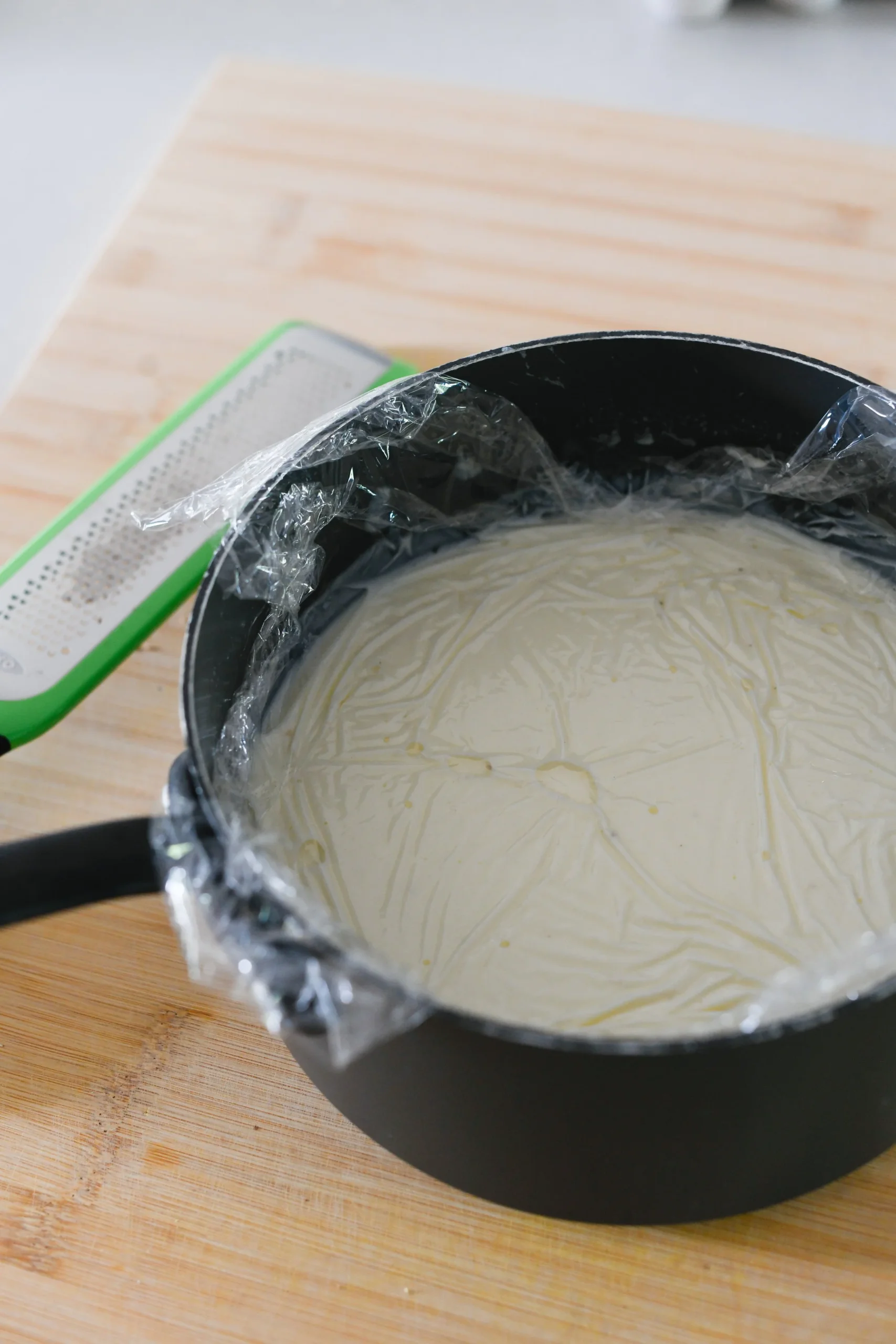
- Cover the béchamel while it sits. Press a piece of cling film directly against the surface to prevent a skin from forming before assembly.
- Completely cover your final pasta sheets. Reserve enough ragu and béchamel for the top so there aren’t any exposed pieces of pasta waiting to become dry and crispy in the oven.
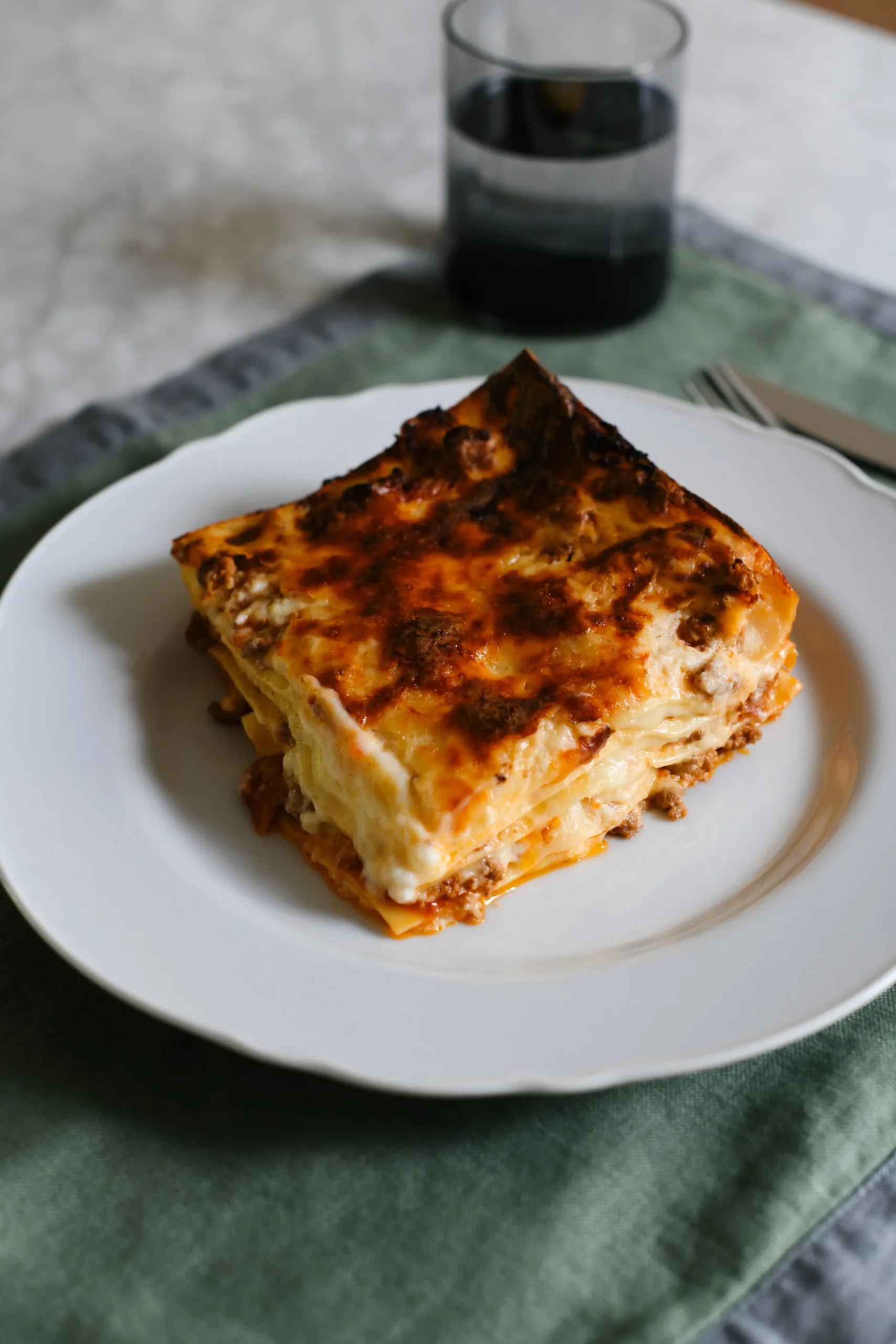
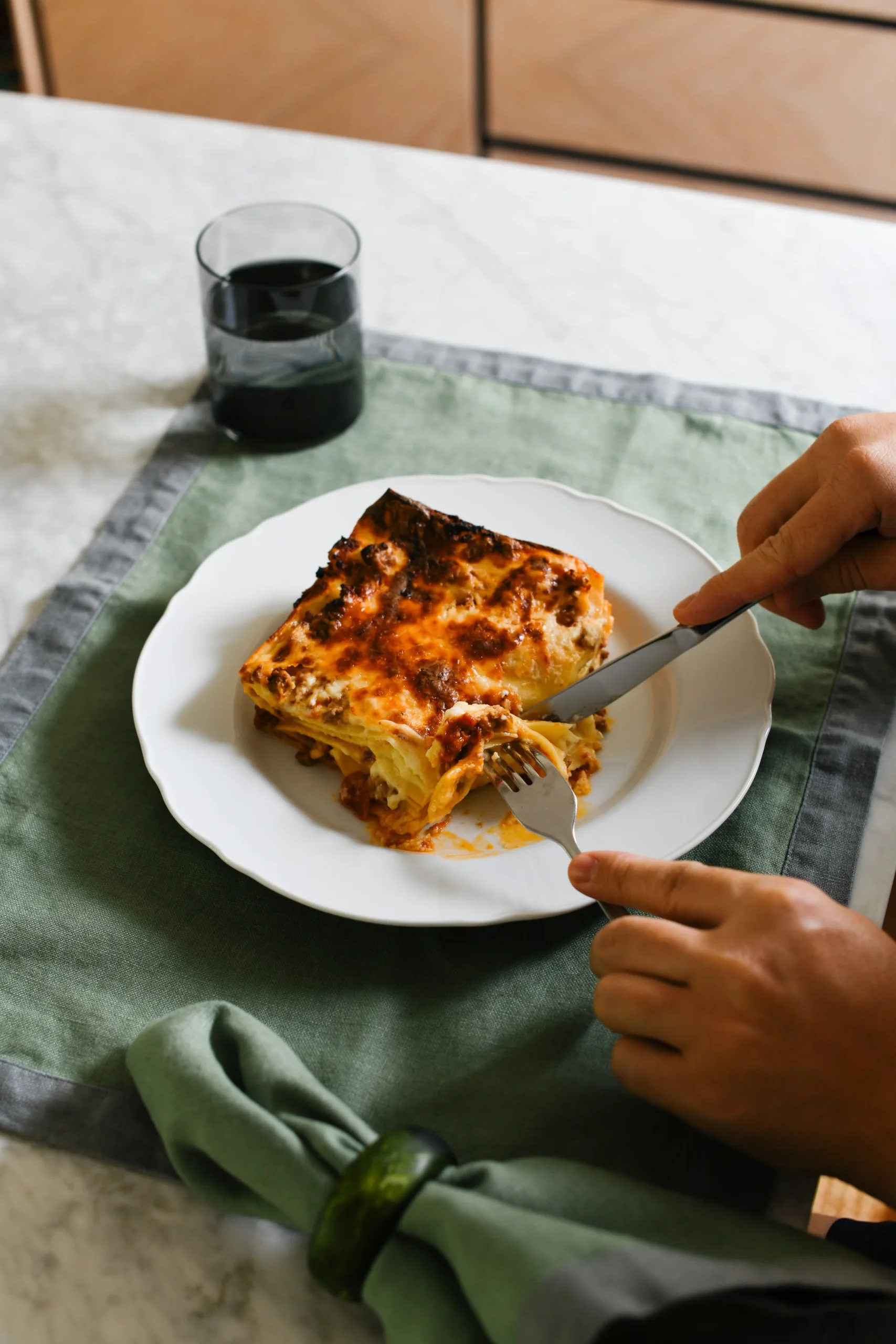
- Let it rest before slicing. Give your lasagne at least 15 minutes out of the oven. You’ll get much neater slices rather than a delicious but slightly chaotic puddle of pasta, ragu and cheese.
Serving Suggestions
Given how rich this classic lasagne is, I tend to keep anything served alongside it very simple.
A crunchy green salad dressed generously with something sharp and acidic is my first choice. Bitter leaves such as rocket or radicchio are particularly good against the rich pork and veal ragu, béchamel and cheese.
You could also serve it with some simply dressed seasonal vegetables or greens and, if you’re particularly hungry, sourdough bread for mopping up whatever sauce is left on the plate.
And obviously, a glass of red wine wouldn’t go astray.
How to Store, Freeze, and Reheat
This classic lasagne recipe is great to prep ahead and stores and freezes well, making all that effort well worth it when you have lasagne ready to reheat after a long day.
- To make ahead: You can also assemble the lasagne ahead of time, cover and refrigerate it before baking. The ragu itself is particularly well suited to being made a day or two ahead, which makes the final assembly far less of an undertaking.
- To store: Allow leftover lasagne to cool, then cover the baking dish well or transfer individual portions to airtight containers. Refrigerate for up to 3-4 days.
- To freeze: I prefer freezing individual portions because they’re much easier to defrost and reheat, but you can freeze a larger portion if you prefer. Wrap well or transfer to freezer-safe containers and freeze for up to 3 months.
- To reheat: Reheat individual portions in the microwave until piping hot throughout, or cover with foil and warm in the oven at 180°C (350°F) until heated through. Adding a small splash of water before covering can help prevent the pasta from drying out.
FAQs
Can I use dried lasagne sheets instead of fresh pasta?
Absolutely. I love using homemade fresh pasta here, and it makes this lasagne particularly special, but dried lasagne sheets are a perfectly good shortcut. Follow the packet instructions, as some sheets can be layered straight into the dish while others need to be cooked first. You may also need to adjust the baking time slightly.
Can I use beef instead of veal?
Yes! I make the ragu with a 50/50 mixture of pork and either veal or beef, depending on what I can get my hands on. Both work beautifully, so there’s no need to hunt down veal specifically for this recipe.
Why does my lasagne turn out watery?
A watery lasagne is usually the result of too much moisture in one or more of the components. Make sure you reduce the ragu properly, use low-moisture mozzarella rather than fresh mozzarella, and don’t make the béchamel too thin. It’s also important to let the finished lasagne rest for at least 15 minutes before slicing so the layers have time to settle.
How many layers should a classic lasagne have?
There’s no magic number, but I generally aim for around five layers of pasta in my 30 cm baking dish. What matters more is getting a good balance of pasta, ragu, béchamel and cheese in every layer without building your lasagne so high that it becomes impossible to serve.
Classic Lasagne
Ingredients
Pasta
- 1 x batch of my master pasta dough
Veal and Pork Ragu
- 4 tbsp extra virgin olive oil
- 1 brown onion finely diced (equating to roughly 1 cup)
- 2 celery sticks finely diced (equating to roughly 1/2 cup)
- 1-2 medium-large carrots finely diced (equating to roughly 1 cup)
- 4 garlic cloves slightly crushed
- 1 kg veal/beef and pork mince 50/50
- 200 ml whole milk
- 2 tbsp tomato paste/puree
- 200 ml red wine
- 2 x 400g tins of whole peeled tomatoes – drained of their juices
- 400 ml beef stock
- 3-4 bay leaves
- Parmesan rind if you have one, but optional!
Besciamella (béchamel) and cheese for assembly
- 100 g unsalted butter
- 100 g flour – tipo 00 or all-purpose
- 1200 ml whole milk
- Fresh nutmeg ground if you can’t find fresh! – optional
- Low hydration mozzarella the melty kind – not buffalo – a couple of big handfuls once grated
- Parmigiano Reggiano – a couple of big handfuls once grated
Instructions
Pasta
- Make the pasta dough.
- Once rested, divide the dough into four pieces. Work with one at a time (keeping the rest covered to prevent them from drying out) – flatten the piece with your hand or a rolling pin before passing it through the thickest setting on your pasta machine. Fold the edges in to create a neat rectangle that fits the width of your pasta machine, and run it through the thickest setting again until your dough is uniform in shape
- Continue passing your dough through the machine, working through each thickness setting until you get to setting 6 or 7, depending on your preference for thickness. I like to go with setting 6, personally.
- Use your baking dish as a measuring guide and cut the rolled sheets of pasta into rectangles that will fit the base on the tin – I find I need two rectangles per layer for a 30cm pan. You’ll want at least 10 sheets to be able to create 5 pasta layers.
- Re-roll any scraps to avoid wastage, and set your cut lasagne sheets aside, covered with a clean tea towel.
Veal and Pork Ragu
- Finely dice the carrot, celery and onion. Smash the garlic cloves.
- Heat olive oil in a large saucepan and gently sauté the veg for around 10 minutes before adding the garlic cloves and cook until fragrant.
- Crumble in the veal and pork mince and use a whisk to help break it up in the pan. Salt generously.
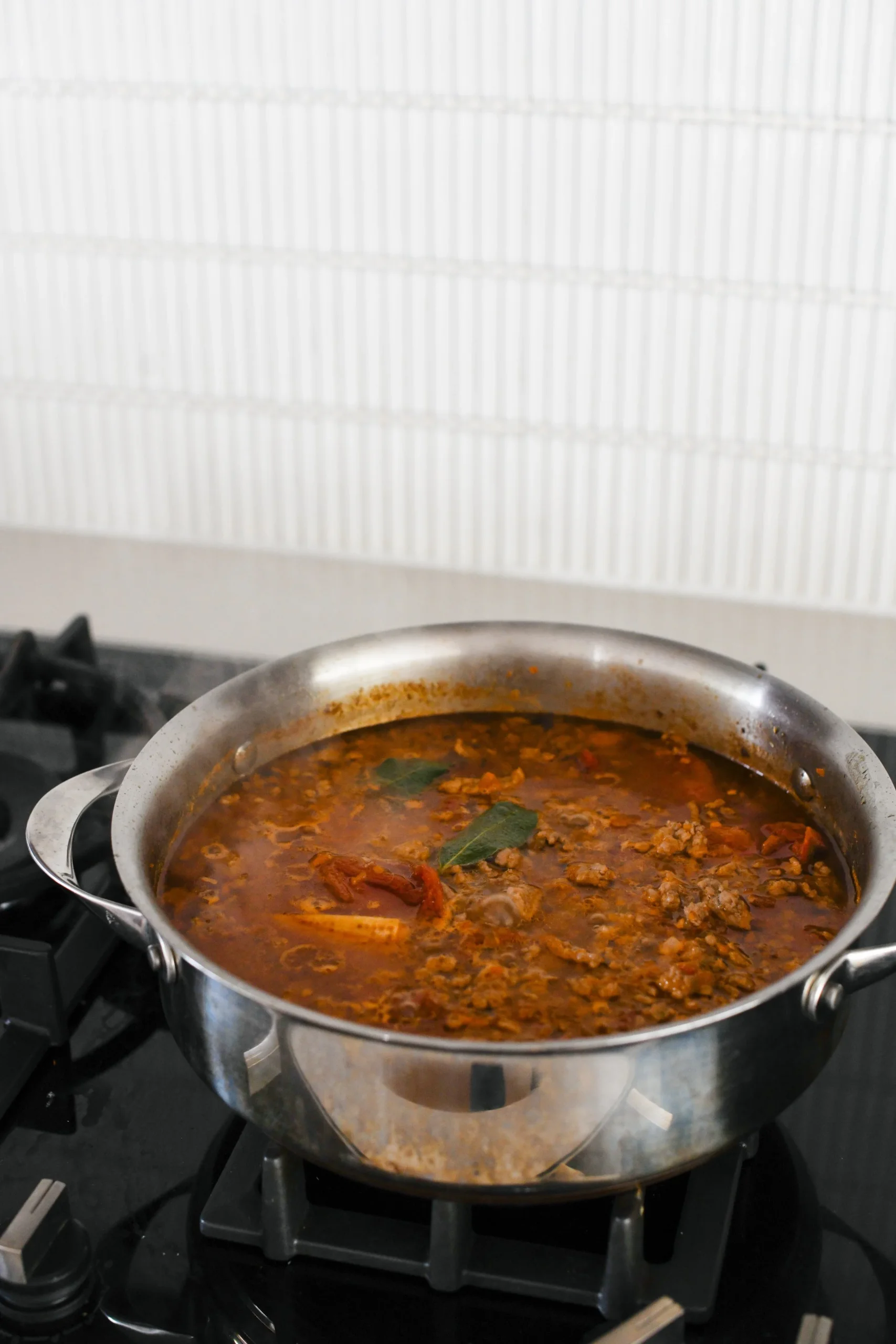
- The meat will release its juices – let it reduce, then add the milk and again allow this to almost entirely reduce. This will take some time – don’t rush it – stir occasionally.
- Next make a space in the pan and add the tomato paste/purée – allow it to cook out for a minute or so, then tip in the red wine – reduce by 2/3.
- Finally, add the tinned tomatoes (remember to strain them from the juice), beef stock, a few bay leaves and a parmesan rind if you have one.
- Bring to a boil, then cover and simmer for around 2-3 hours, stirring occasionally, until the liquid has reduced and you’re left with a luscious ragu. If you find your ragu is drying out, add a splash of water/beef stock as needed. You don’t want this to be crumbly and dry, it should still be moist and have nice movement in the pan.
- Discard the bay and Parmigiano rind and set aside until you’re ready to assemble your lasagne.
Besciamella (béchamel)
- Melt the butter in a saucepan and whisk in the flour until a roux forms (a paste). Allow this to cook for a good 2-3 minutes so as to “cook out” the flour.
- Add the milk – I do this cold – whisking continuously until it’s combined with the roux, then over a gentle heat allow this to cook and thicken, stirring often (this is important).
- To know when it’s the right thickness and consistency, coat the back of a wooden spoon with the besciamella and draw a finger through the sauce – it should leave a clean parting. I try not to take it too far as it tends to thicken when in the oven – when dropped from a spoon it should leave a trail momentarily but not remain gloopy in the pan.
- Remove from the heat and grate in a couple of pinches of fresh nutmeg, and season with salt to taste.
- Set aside and make sure you keep this covered to prevent a skin forming on the besciamella as it cools slightly – I press a piece of clingfilm directly onto the surface until assembly.
Assembly
- Preheat the oven to 180c (350F/160c Fan).
- Bring a large pot of water to a rolling boil and salt generously.
- Working in small batches, cook the lasagne sheets for 30 seconds before transferring onto a clean tea towel.
- Once cool enough to handle, it’s time to assemble
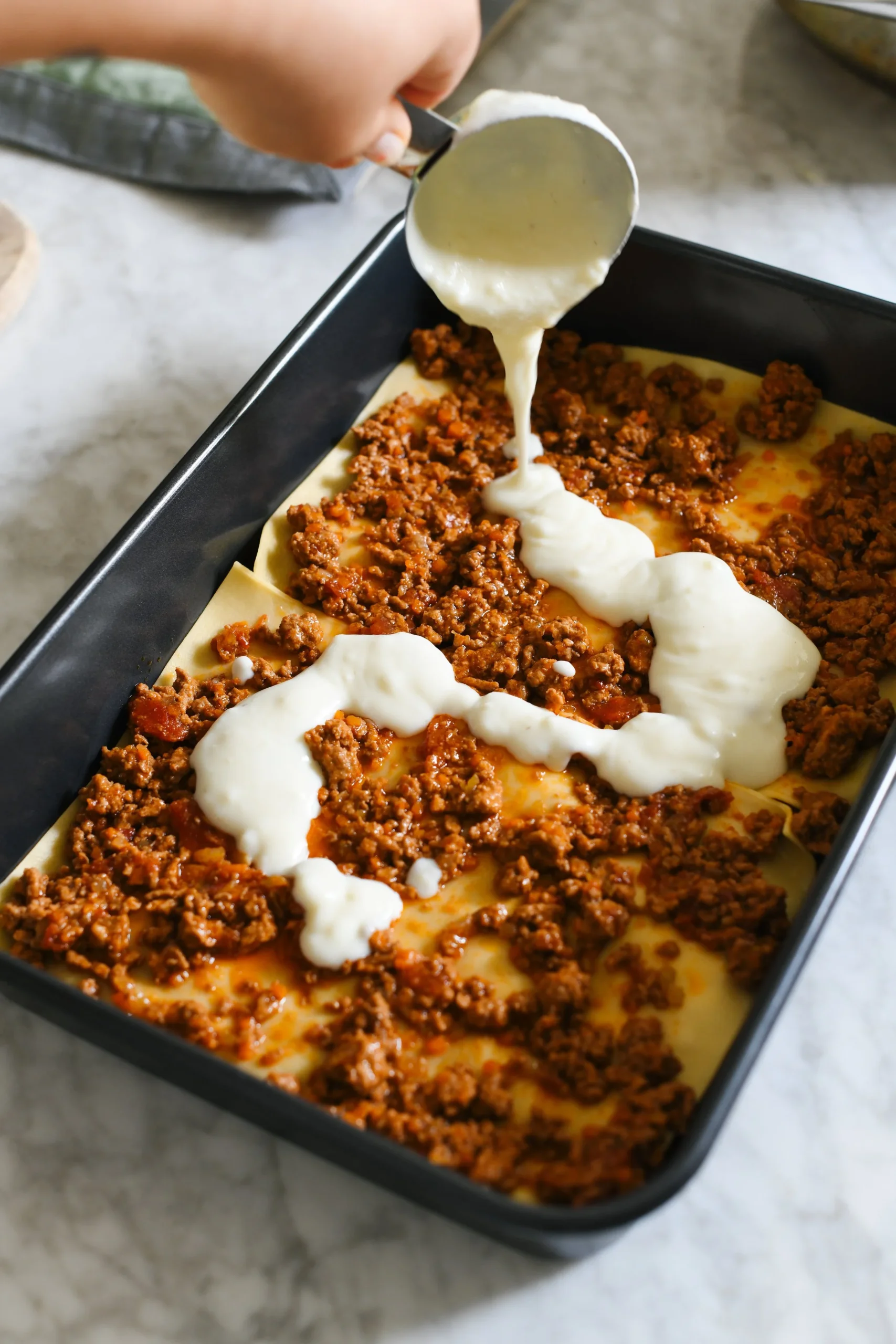
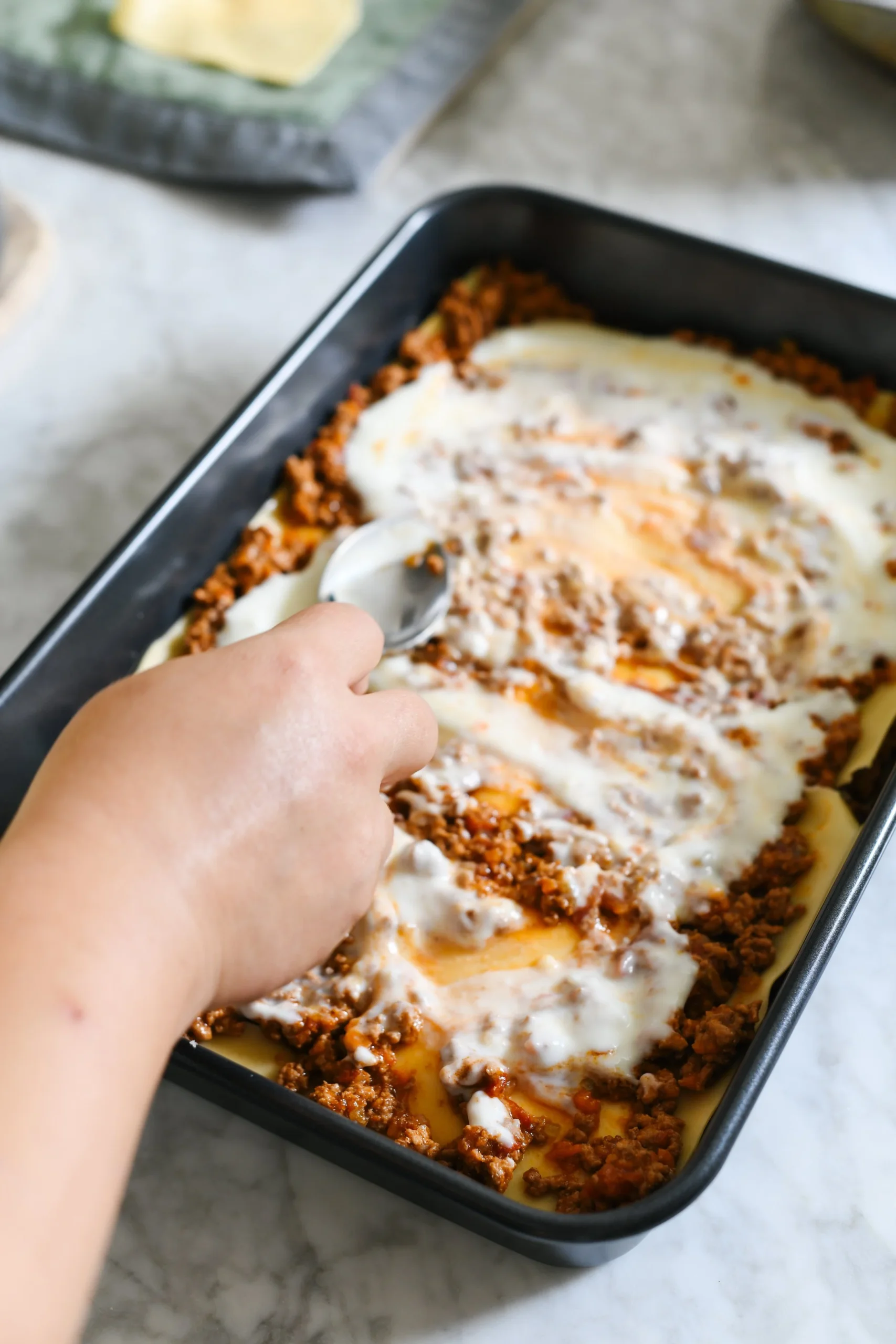
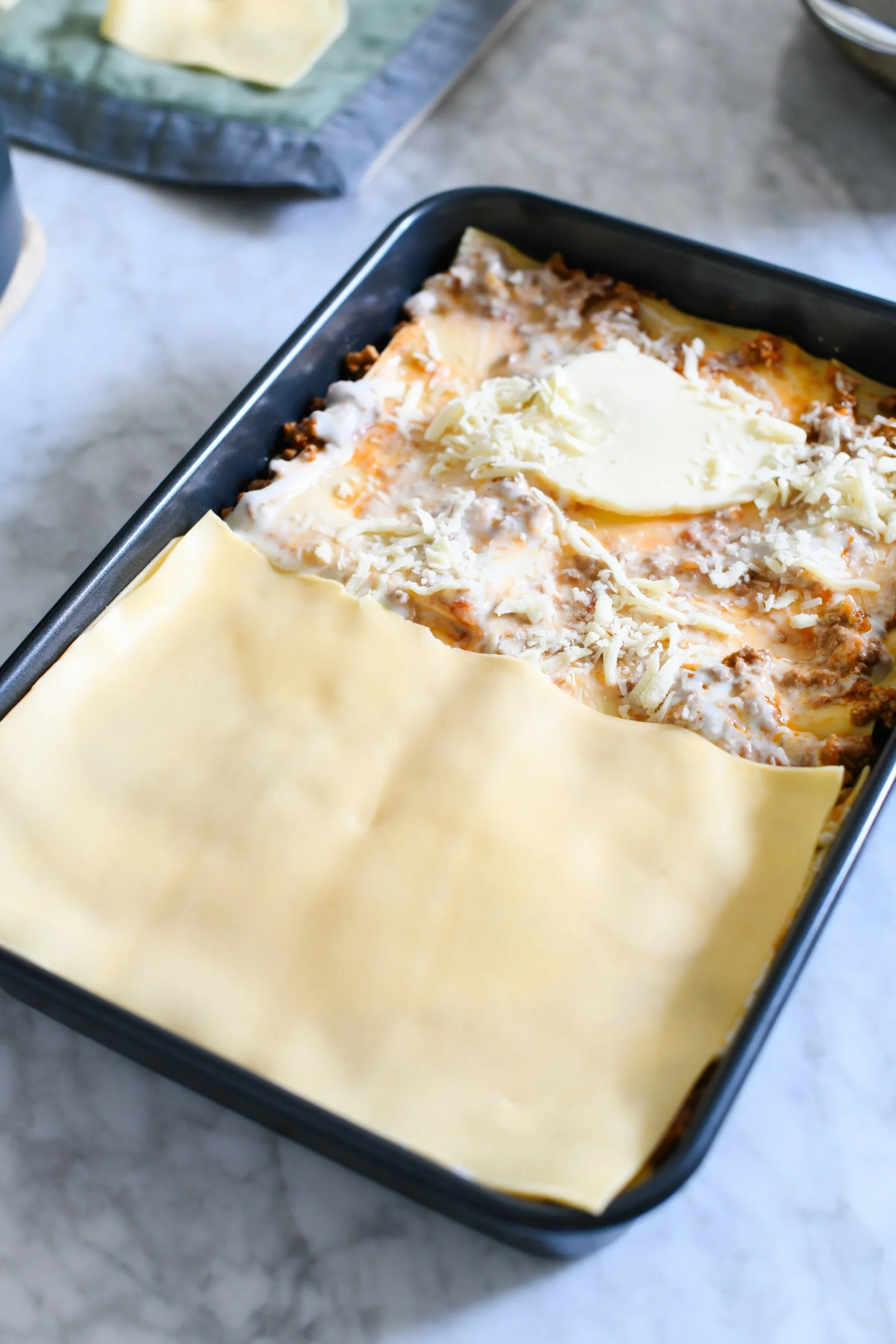
- for your base layer, start with a couple of spoonfuls of ragu on the base of your dish followed by a couple of dollops of besciamella, then a layer of pasta.
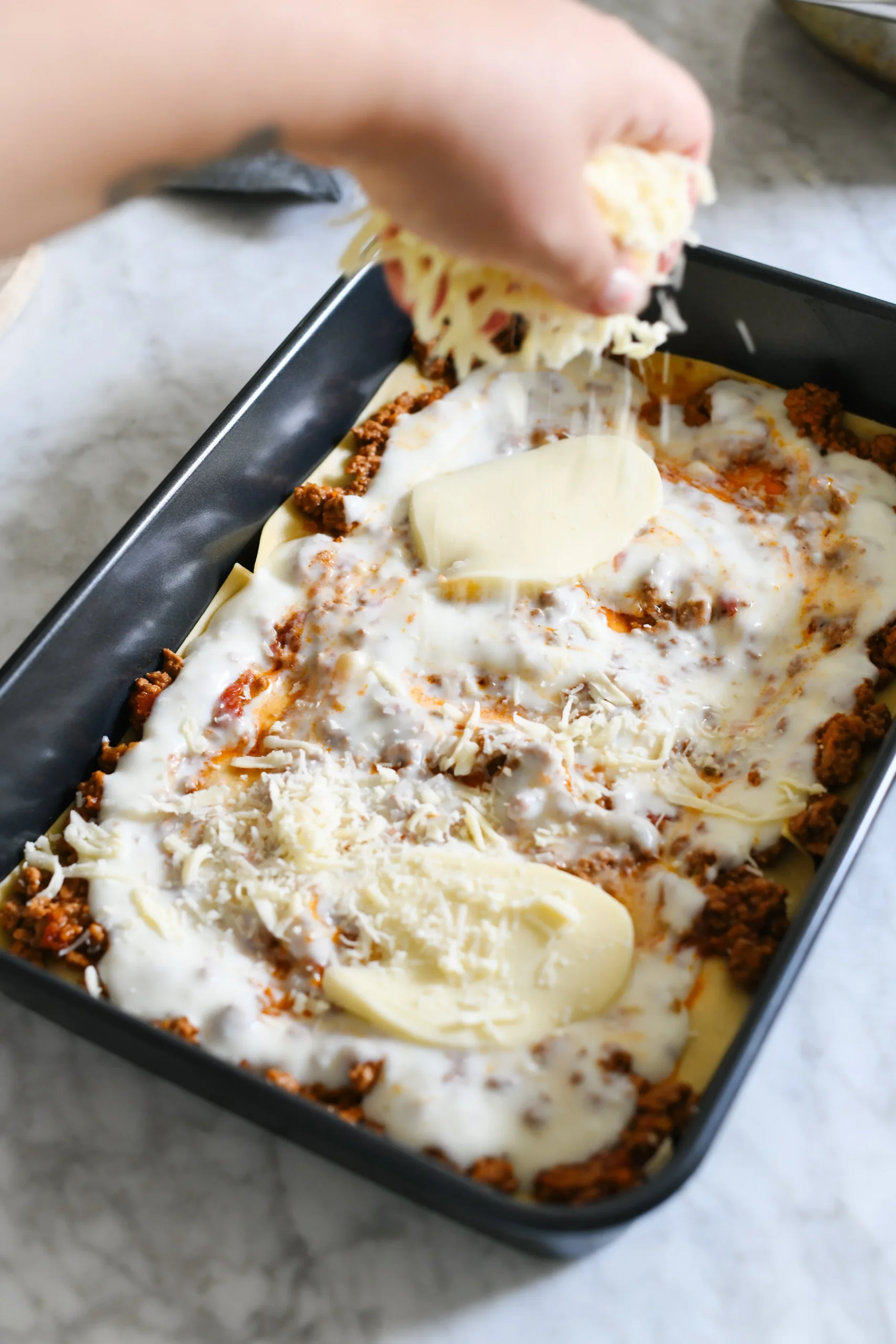
- Next, add ragu, besciamella and a smattering of the grated cheeses (both mozza and parmigiano) – sometimes I like to also add slices of the mozzarella for extra cheesiness… this is of course optional.
- top with another layer of pasta and repeat the process – pasta – ragu – besciamella – cheese – until you get to your last sheet.
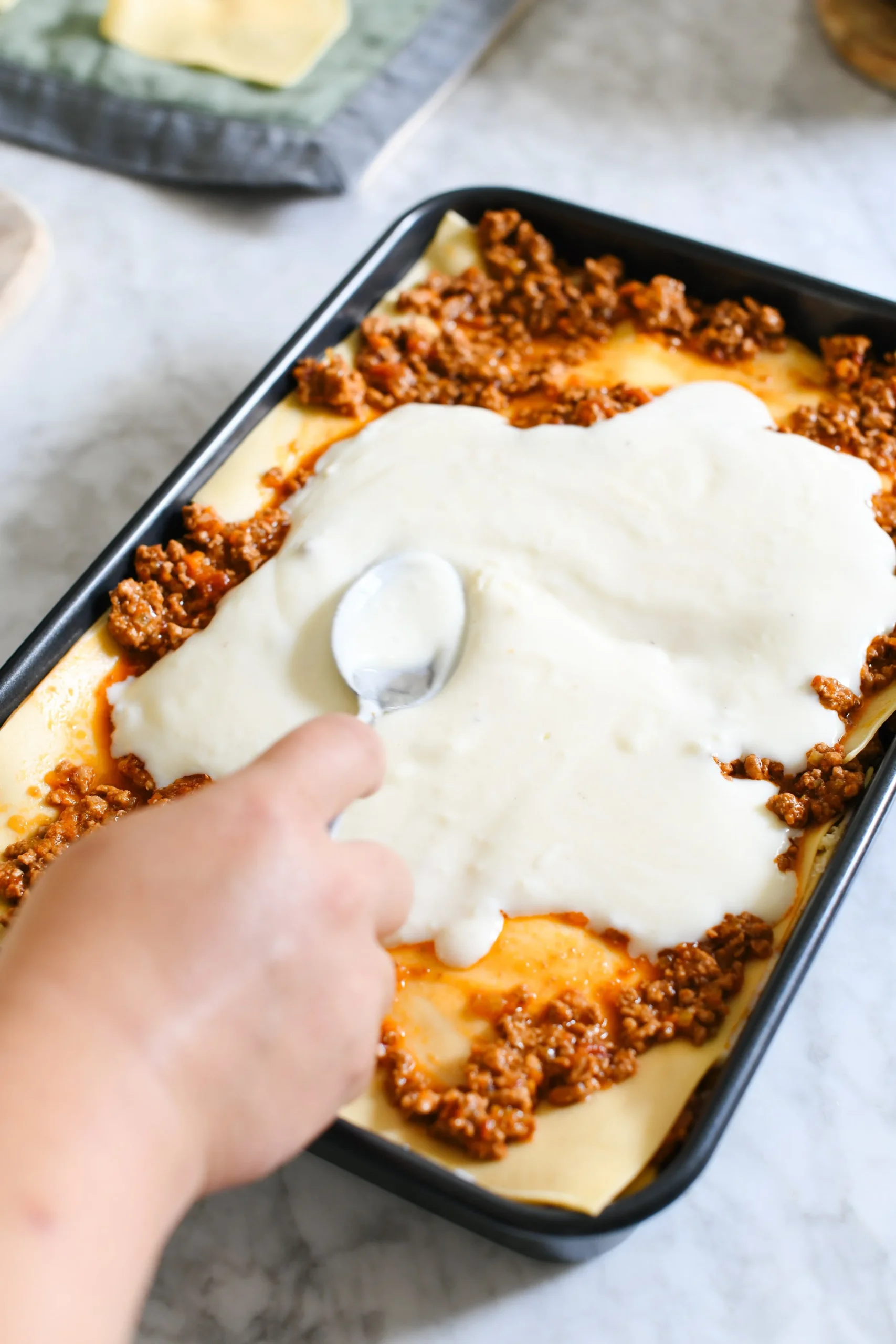
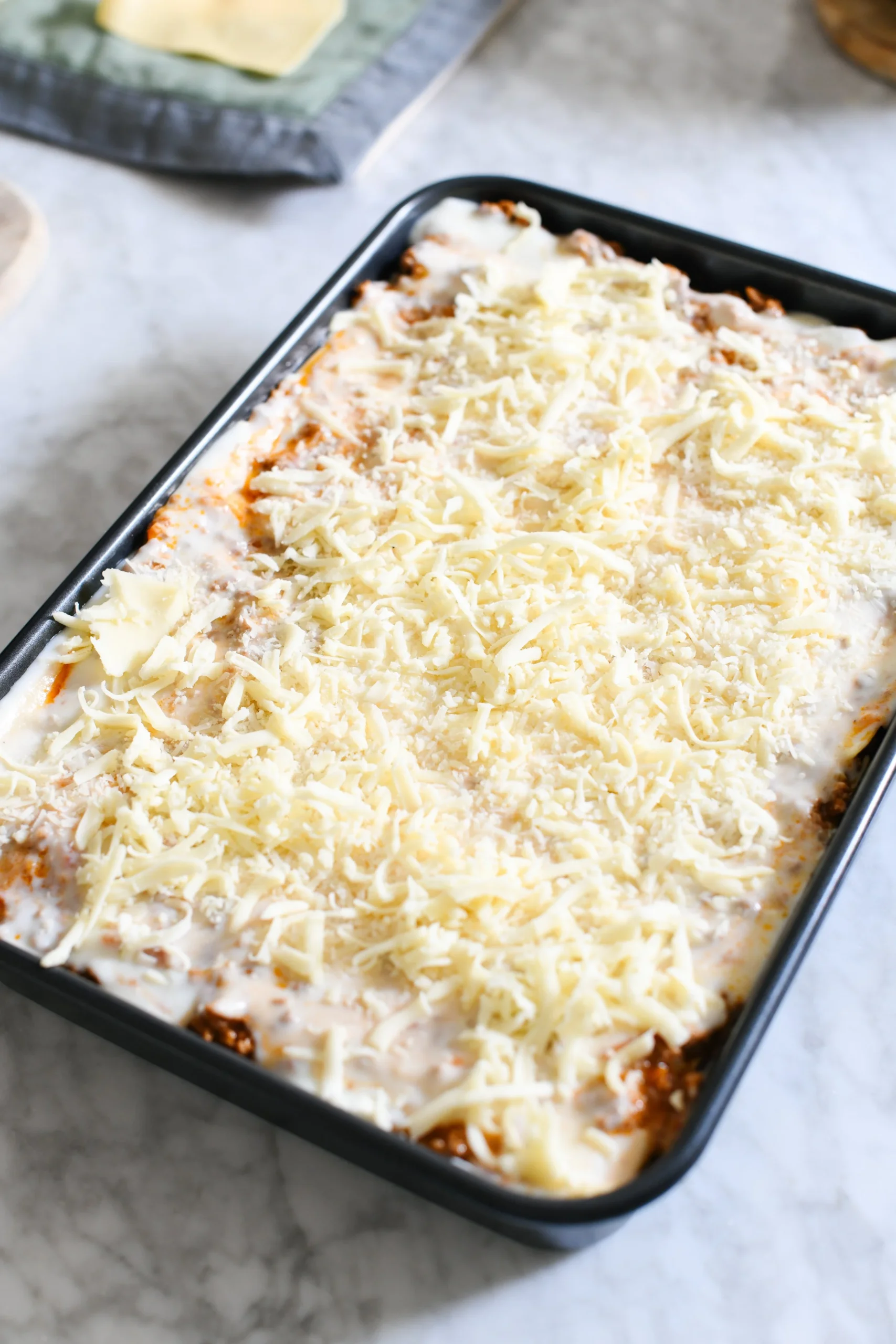
- Use what’s left of your ragu followed by a generous amount of besciamella (reserve some for this final layer!) – you want the pasta sheet fully covered. Cover with a whole heap of the cheeses.
- Bake in the oven uncovered for around 70-80 minutes, then switch to the grill setting for a couple of minutes until the top is crispy and the edges are bubbling.
- Allow the lasagne to cool for at least 15 minutes before serving.